Amethyst Properties And Information: A Complete Guide To Meaning, Origin, Value, And Care
Amethyst is one of the most recognized purple gemstones in the world, valued for its rich color, affordability compared with other purple gems, and wide availability in both jewelry and home décor. If you’re researching Amethyst Properties and Information, it helps to look at amethyst from multiple angles: its geology, its physical and optical traits, its market value, and the popular beliefs around its metaphysical benefits. This guide walks you through what amethyst is, where it comes from, how to identify amethyst confidently, and how to care for it so it stays beautiful for years. Along the way, you’ll find practical examples and buying tips you can use immediately.
What Is Amethyst? A Clear Definition
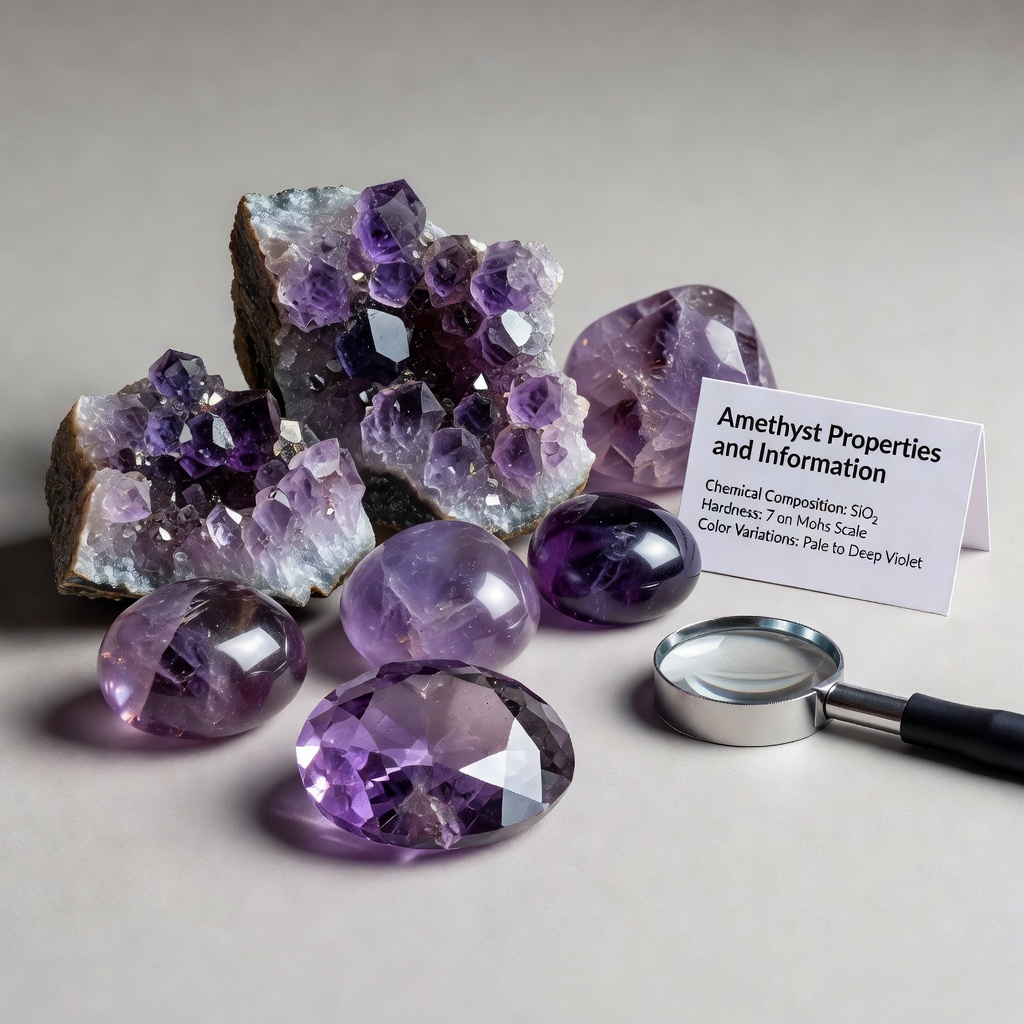
Amethyst is the purple variety of quartz, with the chemical formula SiO2 (silicon dioxide). In crystal form, it most commonly appears as prismatic crystals with pointed terminations, often lining the inside of geodes or growing in clusters on a host rock. From a mineralogy perspective, amethyst belongs to the quartz family and shares many of the same physical traits as clear quartz, citrine, and smoky quartz—its standout feature is the purple coloration. When people talk about amethyst meaning, they often refer to its long history as a stone associated with calmness, clarity, and protection, but the gemstone itself is defined scientifically by its composition and structure.
Quartz crystallizes in the trigonal crystal system (part of the broader hexagonal family), which influences how crystals form and how they interact with light. Amethyst’s color typically ranges from pale lavender to deep violet and sometimes shows red or blue flashes depending on lighting and cut. A useful practical distinction is that amethyst is quartz, so it has quartz-level hardness and optical properties—this immediately separates it from softer purple minerals. For example, purple fluorite is much softer, and purple sapphire is far harder, so knowing the base mineral helps you avoid common identification mistakes.
Amethyst is also frequently confused with other purple gemstones or look-alikes in retail settings. Fluorite can show bright purple tones but is significantly softer and often has obvious cleavage planes. Sapphire can be a deep purple and very durable, but it has different brilliance and much higher value per carat in fine qualities. If you’re comparing stones in a store, a simple starting question—“Is this quartz?”—will often clarify whether you’re looking at true amethyst or a different purple gem entirely.
Geological Origin And Formation
Understanding amethyst origin helps explain why certain pieces have deeper color, larger crystals, or distinctive formations like cathedral geodes. Amethyst typically forms when silica-rich fluids deposit quartz in cavities of volcanic rocks (igneous environments) or in hydrothermal veins where hot mineral solutions move through fractures. Over time, quartz crystals grow inward from cavity walls, and trace elements plus natural radiation create the purple color we recognize as amethyst. One of the most famous formation settings is the geode: a hollow rock lined with crystals that can range from palm-sized to room-sized.
Major global sources include Brazil and Uruguay (especially known for large geodes and dramatic clusters), Zambia (often praised for strong saturation), Russia (historical deposits sometimes linked to “Siberian” trade naming), and Madagascar (varied colors and formations). Deposit types vary by region: basalt-hosted geodes are common in South America, while hydrothermal vein deposits appear in other localities. A practical example: if you see a tall “cathedral” geode sold as décor, it is often from Brazil or Uruguay because those regions produce large, market-friendly geodes in volume.
Several formation factors influence crystal size and color intensity. Slow growth in stable conditions can produce larger, better-formed crystals, while changes in temperature, chemistry, and radiation can cause zoning (bands of deeper and lighter purple). Iron content is important, but it’s not the only factor—irradiation and subsequent natural processes also shape the final hue. If you’re choosing between two similarly sized clusters, color consistency and crystal integrity often reflect more favorable formation conditions and can justify a higher price.
Physical Properties Of Amethyst
The physical profile of amethyst is a big reason it’s so popular in jewelry and lapidary work. As quartz, amethyst has a Mohs hardness of about 7, which makes it reasonably resistant to everyday scratches from common materials like dust and many household surfaces. It has a specific gravity around 2.65 and a refractive index typically in the quartz range (about 1.544–1.553), giving it a bright but not overly “fiery” appearance. Its typical crystal habit is prismatic with a six-sided look, though most jewelry stones are cut rather than left as natural points.
Durability-wise, amethyst is suitable for rings, pendants, earrings, and bracelets, but it’s not indestructible. Quartz does not have perfect cleavage, which is good, but it can still chip or fracture from sharp impacts, especially at thin edges or pointed facet junctions. A real-world example: amethyst rings set high above the band (with exposed corners) are more likely to chip if you knock them against countertops, while bezel settings or protective prongs reduce that risk. If you plan to wear amethyst daily, choosing a setting style that shields the stone’s edges is a practical durability upgrade.
Physical properties also influence cutting decisions. Because amethyst often shows color zoning, cutters may orient the stone to maximize face-up color and minimize pale areas. Some rough has concentrated color at the tips of crystals, so the cutter may plan the table and pavilion to capture the richest purple. For buyers, this means two stones of similar carat weight can look very different: one may be expertly oriented and appear vivid, while another may look “washed out” due to poor orientation or shallow cutting.
Color, Varieties, And Causes Of Purple
Amethyst’s color ranges from delicate lilac to deep royal purple, sometimes with secondary red or blue tones that make the gem look more vibrant. The purple color is mainly associated with iron impurities within the quartz structure and the effects of natural irradiation over geologic time. In practical terms, this is why amethyst from different locations can show noticeably different personalities: some lean more reddish-purple, while others appear cooler and bluish. Lighting matters too—amethyst can look richer in warm indoor light and slightly cooler or lighter in daylight.
Several named varieties and trade terms appear in the market. “Siberian” is often used as a color descriptor for deeply saturated purple with red and blue flashes, even when the stone is not from Russia; it’s more of a marketing term than a reliable origin statement. Chevron amethyst features distinctive V-shaped or banded patterns of purple and white quartz, commonly used in carvings, palm stones, and beads because the pattern is part of its appeal. You may also encounter green amethyst (often sold as prasiolite), which is typically green quartz that may be created or enhanced through heating certain quartz materials; it is related in the quartz family but is not “green amethyst” in a strict mineral naming sense.
Color grading strongly affects desirability and price, which ties directly into amethyst value. Generally, deeper, more saturated purple without looking too dark is preferred, and visible zoning may lower value in faceted stones (though it can increase interest in collector specimens). A helpful shopping tip is to view a stone in multiple lighting environments—near a window, under store spotlights, and in softer indoor light—because some amethyst looks great in display lighting but loses intensity elsewhere. If you’re buying online, prioritize listings with photos or videos in neutral lighting and clear descriptions of tone (light vs. dark) and saturation (weak vs. strong).
Metaphysical And Healing Properties
Many people seek amethyst for its spiritual symbolism and the widely shared beliefs around amethyst healing properties. Common metaphysical claims include calming energy, support for meditation, improved intuition, and assistance with emotional balance. Amethyst is frequently associated with the third eye and crown chakras in modern wellness communities, and it’s often used as a tool for creating a peaceful environment at home or at work. A practical example is placing an amethyst cluster on a nightstand or desk as a visual reminder to pause, breathe, and reset during stressful routines.
Historically, amethyst meaning has been linked to sobriety and clear-mindedness, tracing back to Greek and Roman traditions where the stone was believed to discourage intoxication. Across different cultures and eras, amethyst has been worn as an amulet, used in religious objects, and incorporated into ceremonial items intended to symbolize purity or protection. In modern practice, people often use amethyst in meditation by holding a tumbled stone, focusing on breath, and setting a specific intention (such as better sleep hygiene or reduced rumination). The gemstone becomes part of a consistent ritual, which can be valuable for habit-building even without any measurable “energy” effect.
From a scientific perspective, these metaphysical claims do not have clinical proof, and amethyst should not be treated as a replacement for medical care or mental health support. However, many wellness practices work through context, routine, and the placebo effect—factors that can still produce real perceived benefits for some individuals. A balanced approach is to treat amethyst as a complementary tool: use it to support mindfulness, relaxation, or personal symbolism while relying on evidence-based healthcare for diagnosis and treatment. If a seller guarantees medical outcomes, consider that a red flag rather than reliable guidance.
Common Uses: Jewelry, Decor, And Industry
Amethyst uses are diverse, ranging from fine jewelry to statement décor pieces. In jewelry, amethyst is commonly cut into oval, round, cushion, emerald, pear, and trillion shapes, and it’s used in rings, pendants, earrings, bracelets, and beaded strands. Because it’s relatively affordable compared with many colored gemstones, it’s also popular in larger center stones where size matters for visual impact. A practical styling tip is to pair deep purple amethyst with yellow gold for strong contrast or with white metals (silver, platinum, white gold) for a cooler, modern look.
In décor, amethyst geodes, clusters, spheres, and carvings are widely used as focal points in homes and studios. Large geodes are often placed in entryways, living rooms, or meditation corners, while smaller clusters are used as shelf accents or desk décor. One home décor trend is pairing amethyst with neutral color palettes—cream, gray, or natural wood—so the purple becomes a deliberate accent rather than visual clutter. If you’re decorating with crystals, consider stability and placement: heavier geodes should sit on a level surface away from high-traffic edges to prevent accidental tipping.
Amethyst also has a strong presence in collector and lapidary communities. Collectors may seek unusual growth patterns, rare localities, or exceptionally clean and sharp crystal points, while lapidaries value rough that cuts with good face-up color. In the broader gemstone market, amethyst remains a staple for birthstone jewelry (February) and for affordable color in designer collections. If you’re building a small collection, a practical approach is to choose one “hero” specimen (a high-quality cluster) and supplement with a few well-cut faceted stones that show different hues or origins.
How To Identify And Test Authenticity
Learning how to identify amethyst starts with careful observation. Natural amethyst often shows subtle color zoning, with areas of lighter and darker purple, especially visible in some crystals or lower-quality faceted stones. Under magnification, you may see natural inclusions such as fine veils, tiny mineral crystals, or growth features typical of quartz. The luster is typically vitreous (glassy), and in some orientations quartz can show optical effects related to its crystal structure, though these are not always obvious to the naked eye.
Simple at-home checks can help you screen for obvious fakes, though they are not a substitute for professional testing. Because amethyst is hardness 7, it should resist scratches from materials like glass in many cases, but scratch testing can damage stones and is not recommended for finished jewelry. A safer method is using a 10x jeweler’s loupe to look for dye concentrations, unnatural bubbles (more typical in glass), or suspiciously uniform color. If a stone is an extremely vivid purple at a very low price and shows no zoning or inclusions at all, that combination can be a prompt to investigate further rather than an automatic sign of quality.
Professional tests are the most reliable way to confirm authenticity and detect treatments. Gemologists may measure refractive index, examine the stone with a polariscope, and use spectroscopy or other tools to identify diagnostic features consistent with quartz and consistent with amethyst color centers. Common issues include synthetic amethyst (lab-grown quartz that can be visually similar), heat-treated quartz (some amethyst can turn yellowish and be sold as citrine or altered shades), and dyed stones (especially in beads or low-cost decorative items). If you suspect a fake amethyst, a practical buying step is to request seller disclosure about treatments and, for higher-value purchases, ask for an independent lab report or at least a return window long enough to verify the stone.
Care, Cleaning, And Storage Tips
Good amethyst care is straightforward and mostly about avoiding extremes. The safest cleaning method is warm water with mild soap and a soft brush, followed by a thorough rinse and gentle drying with a soft cloth. This method removes skin oils and everyday residue that can dull the stone’s appearance without exposing it to harsh conditions. A practical example is cleaning an amethyst ring once every couple of weeks if worn daily, especially if lotion, sunscreen, or hair products frequently contact the gemstone.
Avoid harsh chemicals and be cautious with ultrasonic cleaners or steam, particularly if the stone has fractures, inclusions, or is set in a delicate mounting. Even though quartz is relatively durable, some jewelry settings can loosen with vibration, and temperature shocks can stress stones. Another key care tip is to keep amethyst away from prolonged direct sunlight or strong heat sources, as extended exposure can contribute to color fading over time. If you store crystals on a windowsill for décor, rotate them periodically or move them to indirect light to preserve their color.
For storage, keep amethyst jewelry separated from harder gemstones like sapphires and diamonds that can scratch it. A fabric-lined jewelry box with individual compartments or soft pouches works well, and it also prevents tangling chains from pulling on prongs. If a stone becomes scratched or loses polish, a professional jeweler or lapidary can often re-polish it, but it’s best to prevent damage in the first place by removing amethyst jewelry for heavy chores, sports, and lifting. When in doubt, a quick routine of “last on, first off” (put jewelry on last, remove first) reduces contact with cosmetics, cleaners, and knocks.
Buying Guide: Grading, Pricing, And Certification
When evaluating amethyst value, the most important factor is usually color: the market tends to reward stones with strong saturation, attractive hue, and an even face-up appearance. Clarity matters too, especially for faceted gems, where eye-visible inclusions can reduce brilliance and lower price. Cut quality can dramatically change how amethyst looks—well-proportioned stones return more light and show richer color, while poorly cut stones may appear dark in the center or overly pale. Carat weight also plays a role, but because amethyst is relatively available, size alone is less valuable than in rarer gemstones.
Origin can influence pricing, but it’s often complicated by inconsistent trade labeling. Some sellers assign origin based on supplier information, and terms like “Siberian” may describe a color style rather than verified locality. If origin is important to you, ask for documentation and be cautious of absolute claims without evidence. A practical example is comparing two similarly colored stones: if one is claimed to be from a premium origin but has no paperwork and the other has a reputable lab report, the documented stone may be the safer purchase even if the label sounds less glamorous.
If you’re buying amethyst online, look for multiple photos in neutral lighting, video when available, and clear disclosures about treatments (heated, dyed, or lab-grown). Read return policies carefully and prioritize sellers who allow returns without excessive restocking fees, since color can vary significantly between screens. For in-person buying, ask to view the stone away from intense spotlights and check how it looks at arm’s length, since that’s how it will be seen in daily life. Negotiation is more common for specimens and larger purchases; a practical approach is to ask for a small discount, free shipping, or an upgraded setting rather than pushing only for price reduction.
Cultural History, Symbolism, And Folklore
Amethyst has a long cultural history that strongly shaped modern amethyst meaning and demand. In ancient Greek and Roman traditions, amethyst was associated with sobriety and clear judgment, and it appeared in amulets, seals, and drinking-related legends that elevated its status. In Egypt, gemstones were often used for adornment and symbolic protection, and quartz varieties were valued for beauty and perceived significance. During medieval times, amethyst became closely linked with religious contexts, appearing in ecclesiastical rings and objects where the purple color aligned with themes of devotion, humility, and spiritual authority.
Symbolically, amethyst is commonly associated with protection, spirituality, inner peace, and moderation. In modern wellness culture, it’s often used as a symbol for stress relief and mindful living, and it’s frequently given as a gift to represent support during transitions such as new jobs, moves, or recovery periods. A practical example is gifting a small amethyst pendant or tumbled stone with an intention card; even for recipients who are not deeply spiritual, the symbolism can be a meaningful and personal touch. These cultural associations continue to influence how amethyst is marketed, from “calming crystal” messaging to luxury presentations of deep purple stones.
Folklore also affected trade and naming conventions. Terms like “Siberian” became shorthand in some markets for a desirable color profile, which can create confusion when buyers assume it guarantees geographic origin. Stories and symbolism increased demand in different eras, and demand influenced what miners, cutters, and jewelers brought to market. Today, understanding the difference between folklore, marketing, and gemological facts helps you buy with confidence while still enjoying the cultural richness that makes amethyst so appealing.
Frequently Asked Questions
What Are The Main Properties Of Amethyst?
Amethyst is a purple variety of quartz with chemical formula SiO2, a Mohs hardness of about 7, hexagonal crystal system, and color caused mainly by iron impurities and irradiation.
Does Amethyst Have Healing Properties?
Many people attribute calming, stress-relief, and intuition-enhancing qualities to amethyst, but these metaphysical claims lack clinical evidence and should be considered complementary to conventional health care.
How Can I Tell If An Amethyst Is Real?
Check for natural color zoning and inclusions under magnification, test hardness against known minerals, and when in doubt request a refractive index or spectroscopy report from a gemologist to confirm authenticity.
How Should I Clean And Care For Amethyst Jewelry?
Clean amethyst with warm soapy water and a soft brush, avoid prolonged sunlight and high heat to prevent fading, and remove jewelry for rough activities to prevent chips or scratches.
Where Is Amethyst Commonly Found?
Major amethyst sources include Brazil and Uruguay (large geodes), Zambia (deep color), Russia (historical deposits), Madagascar, and parts of the United States and Canada.
What Affects The Value Of An Amethyst?
Value is driven by color intensity (deep, saturated violet preferred), clarity, cut quality, carat size, and sometimes origin; treatments and synthetic stones lower natural-value perception.
Can Amethyst Fade Or Change Color Over Time?
Yes—extended exposure to direct sunlight or intense heat can fade amethyst's color. Proper storage away from sunlight and heat reduces the risk of fading.