
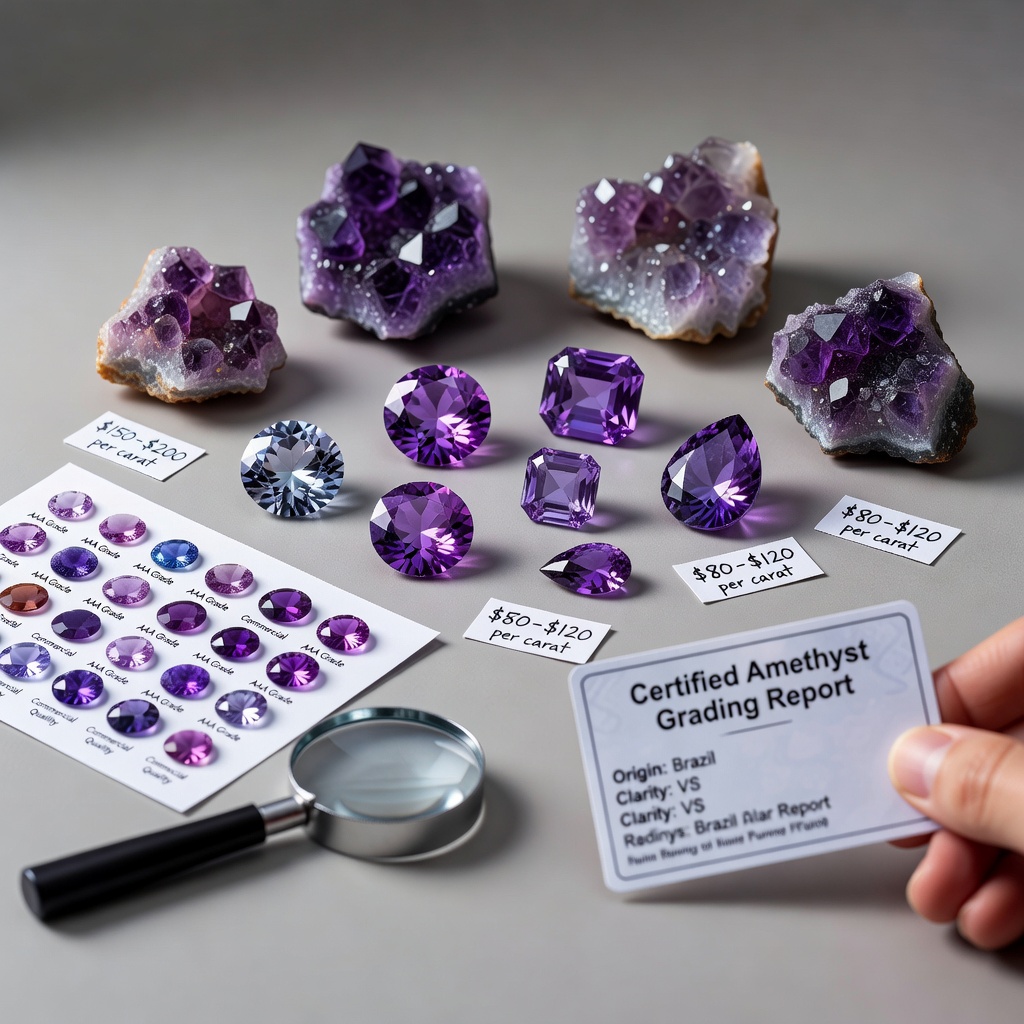
Introduction: Why Use An Amethyst Price Guide
Amethyst is one of the most popular purple gemstones on the market, loved for its wide range of violet-to-deep-purple colors and its accessibility across many budgets. Because the supply is relatively steady and quality varies dramatically from stone to stone, pricing can feel inconsistent unless you have a structured way to compare what you’re seeing. This Amethyst Price Guide is designed to help you estimate amethyst value quickly by understanding the major pricing drivers, typical price-per-carat ranges, and the trade-offs sellers may not explain clearly.
Use this guide when you’re shopping for a loose stone, evaluating jewelry, or comparing listings across vendors. You’ll be able to make faster decisions by matching a stone’s color grade, clarity, cut quality, and carat weight to realistic market bands. Just as importantly, you’ll learn when documentation (like a lab report) is worth paying for and how to ask the right questions about treatments and origin.
What Determines Amethyst Value
Amethyst value is most strongly shaped by the classic “4Cs”: color, clarity, cut, and carat weight. Among these, color typically dominates pricing because buyers pay premiums for rich, even purple with attractive saturation. Clarity and cut quality often separate “looks good in a photo” stones from gems that perform well in real-life lighting, while carat weight influences rarity and price structure, especially once stones become large and clean.
Secondary factors also matter, including origin, amethyst treatments, and broader market demand. For example, a fine deep-purple stone from a desirable locality may command higher pricing than a similar-looking stone with unknown provenance. The highest prices tend to appear when multiple positives align—strong color, high clarity, excellent cutting, larger size, and credible documentation—while one weak factor (such as obvious zoning or poor cutting) can reduce value disproportionately.
Practical comparison tip: when you’re evaluating two stones, try to isolate one variable at a time. Compare two similar sizes to judge color premium, or compare two similar colors to see how clarity or cut changes price. This method prevents “bundle bias,” where a seller’s premium for one strong trait masks weaknesses elsewhere.
Color & Grading: Reading The Color Chart
Color is the primary driver in amethyst grading and the key to interpreting any amethyst color chart. In general, amethyst is graded from pale lavender to medium violet to deep purple, with the most coveted stones showing strong saturation and even distribution. In trade language, you may see “Siberian” tone used to describe a rich, velvety purple that can show subtle red or blue secondary hues, though the term is sometimes used loosely as a marketing label rather than a strict origin claim.
For pricing, saturation and hue usually matter more than simple brightness. A stone that looks bright but weakly saturated can appear “washed out” in everyday wear, especially in indoor lighting. By contrast, a deeply saturated gem with a clean, pleasing hue can look luxurious even at smaller sizes, which is why it often earns a higher amethyst price per carat.
To compare stones using a standardized amethyst color chart, use consistent lighting and a neutral background. Daylight-equivalent lighting (around 5000–6500K) helps reveal whether a purple leans too gray, too brownish, or too inky. A practical approach is to keep a few reference photos of color grades on your phone and compare side-by-side, but always confirm by viewing videos or multiple angles because amethyst can show extinction (dark areas) depending on cut and orientation.
Example you can apply while shopping: if two stones are both labeled “deep purple,” look for evenness across the face-up view. If one has noticeable zoning (light and dark bands) across the table, it should be priced below a uniformly colored stone, even if the peak color in the best area looks similar.
Clarity, Cut & How They Affect Price
Amethyst often appears eye-clean, but clarity differences still affect price—especially in larger stones where inclusions become easier to see. Typical inclusions can include faint feathers, wispy veils, and occasional color zoning; prominent cracks or cloudy areas are value killers because they reduce brilliance and durability. In amethyst grading, eye-clean stones with minimal distractions tend to trade at a premium, while stones with obvious inclusions often fall into commercial ranges even when color is decent.
Cut has a direct impact on both beauty and value because it controls how the gem returns light. Popular shapes like oval, cushion, emerald cut, and round are common, but not all are executed equally. A well-proportioned cut can make a medium-color amethyst look richer by improving light return, while a poorly cut stone may show windowing (you can see through the center) or extinction (dark dead zones), reducing perceived quality and lowering amethyst value.
Size, clarity, and cut interact in real-world pricing. For example, a large 20+ carat amethyst might be affordable if the cutting is shallow and the stone windows, but it won’t “read” as luxurious once set. A smaller stone with excellent cutting and high clarity can look more expensive on the hand than a larger but poorly cut gem, making it a smarter buy for jewelry.
Practical trade-off example: if you’re choosing between a 10 ct stone with visible inclusions and a 7 ct eye-clean stone of similar color, the 7 ct is often better value for a ring. The eye-clean appearance improves wearability and perceived quality, and it can be easier to resell compared to a large stone with obvious clarity issues.
Carat Weight & Price Per Carat Ranges
Amethyst price per carat varies widely based on quality, and pricing is not always linear as size increases. Commercial-quality stones can be inexpensive even at larger sizes, while fine color and high clarity can push per-carat prices upward, especially when the cut is strong and the stone faces up well. In many listings, sellers lean heavily on carat weight as a selling point, so it helps to anchor your decision in quality first and size second.
As stones get larger, two opposing forces influence price. On one hand, large amethyst is relatively available compared to many colored gems, which can keep prices moderate. On the other hand, large stones with top color, excellent clarity, and high-quality cutting become less common, and that combination is what can create meaningful per-carat premiums.
Typical Amethyst Price Per Carat Bands (Market Ranges)
Use these bands as a starting point for comparison, assuming typical retail online pricing for loose stones (not auction bargains and not luxury-brand markups). Commercial quality commonly ranges from about $2–$10 per carat, often showing lighter color, zoning, or average cutting. Mid-range gem-quality frequently falls around $10–$40 per carat, usually with better saturation, cleaner appearance, and more consistent cutting. Top deep-purple stones, rare varieties, or stones with premium origin/provenance can range roughly $40–$200+ per carat depending on size, cut, and documentation.
Quick Reference Table By Size Category (Illustrative Examples)
Small stones (under 3 ct) often show the widest selection and the tightest competition among sellers. A 1.5 ct mid-range violet amethyst might retail around $15–$60 total depending on cut and clarity, while a 2 ct top-color stone could land around $80–$300+ if it’s exceptionally saturated and well cut. These are the stones many buyers choose for earrings or cluster settings, where matching color matters as much as single-stone perfection.
Medium stones (3–10 ct) can be the sweet spot for statement rings and pendants because they face up large without demanding extreme budgets. A 5 ct mid-range gem-quality amethyst might be priced roughly $50–$200 total, while a 7–10 ct fine deep-purple, eye-clean, well-cut stone could move into the $300–$1,500+ range depending on how “top” the color truly is. When shopping this size band, insist on videos because windowing becomes more noticeable.
Large stones (10+ ct) can look impressive, but quality separation becomes critical. A 15 ct commercial stone might still be relatively affordable, sometimes under a few hundred dollars total, particularly if it’s pale or poorly cut. A 20 ct stone with strong saturation, minimal zoning, high clarity, and excellent cutting can command a much higher total price, and the seller may reference origin or “Siberian tone” to justify the premium—so documentation and visual proof matter more in this range.
Treatments, Enhancements & Their Effect On Price
Amethyst is generally sold untreated, but amethyst treatments do exist and can affect both pricing and buyer confidence. Heat treatment may be used to modify tone or reduce brownish tints, and irradiation is sometimes used in quartz varieties to alter or intensify color outcomes. While these treatments can produce attractive gems, treated stones are typically priced lower than comparable natural, untreated material, especially when the treatment meaningfully changes appearance.
Detection is not always straightforward for consumers, which is why disclosure is important. A practical buying approach is to ask the seller directly whether the stone is treated, and request a lab report for higher-value purchases. If a seller cannot clearly answer treatment questions or avoids the topic, treat that as a negotiation point or a signal to shop elsewhere.
Treatments can be acceptable for fashion jewelry when they’re disclosed and priced accordingly. However, disclosure is critical when you’re buying for a gift, for collection purposes, or with resale in mind, because buyers often discount treated stones more heavily in secondary markets. Case example: two amethysts can look similar online, but the untreated stone with documentation may resell faster and at a better price even if the initial purchase cost is higher.
Origin, Rarity & Special Varieties
Origin can influence desirability, especially when it correlates with a recognizable look or a consistent supply reputation. Brazil and Uruguay are well-known sources, and stones from these regions can range from commercial to very fine depending on the specific deposit and cutting quality. Zambia has produced attractive material that can show strong saturation, and “Siberian” is often used to describe a premium color profile—even when the stone is not literally from Siberia—so it’s important to separate color description from true provenance.
Rarer varieties and special looks can command premiums when demand is strong. Deep “Siberian tone” stones with rich saturation and pleasing secondary hues often price higher when the look is convincing and the cut is good. Chevron amethyst, known for banded patterns (often used in cabochons or carvings), can also command higher pricing in designer pieces, though its value is typically driven more by pattern appeal and craftsmanship than by standard faceting grades.
Provenance documentation becomes more important as you move up the price ladder. If a seller claims a specific origin to justify a premium, ask what evidence supports it—mine-to-market records, a reputable dealer’s invoice history, or a lab note (when available). In resale situations, credible paperwork can reduce buyer uncertainty, aligning with amethyst market trends where transparency increasingly affects liquidity and final sale price.
Reading Price Tables, Appraisals & Certifications
Price tables are useful, but they always include assumptions—such as a particular color grade range, typical cutting quality, and an implied market level (wholesale vs retail). When using any Amethyst Price Guide table, confirm what the category names mean in practice: “AAA,” “Siberian,” or “premium” are not standardized terms across sellers. A smart move is to use tables only after you’ve graded the stone yourself by color, clarity, and cut appearance, then use the table to sanity-check whether the price is reasonable.
Appraisals and certifications serve different purposes. An insurance appraisal often reflects replacement value in a retail context, which can be higher than what you paid and higher than what you could resell for. A gem lab report focuses on identification and may comment on treatment; for higher-value stones, a report can reduce disputes and improve buyer confidence when you sell later.
Understand the difference between retail, wholesale, and auction pricing. Retail includes seller overhead, curation, return policies, and sometimes branding; wholesale is typically lower but often requires trade access and faster decision-making. Auctions can produce bargains, but they can also run hot if multiple bidders want the same color grade or if a stone has compelling provenance, reflecting real-time amethyst market trends rather than stable list pricing.
Buying Strategies, Negotiation & Where To Buy
The best place for buying amethyst depends on your risk tolerance and how particular you are about color. Reputable gemstone dealers and established jewelers can offer consistent grading, return policies, and better disclosure practices. Auctions and online marketplaces can offer strong deals and selection, but you must compensate with careful verification: demanding videos, asking about treatments, and checking seller reputation and return terms.
Negotiation works best when it’s based on specifics. Ask direct questions: Is the amethyst treated (heat or irradiation)? Is the origin known or documented, or is “Siberian” only a color description? What is the return window, and who pays for insured shipping both ways? When you point to concrete issues like windowing, visible inclusions, weak saturation, or lack of documentation, sellers are more likely to adjust price than if you simply ask for “a discount.”
Before you buy, use a practical checklist to avoid costly surprises. Confirm whether photos are taken in neutral lighting and request a daylight video; amethyst can look dramatically different under warm indoor lights. Verify measurements (mm size) in addition to carat weight, because shallow cuts can inflate carat weight without improving face-up size. For higher-value purchases, prioritize sellers offering independent certification, clear treatment disclosure, and insured shipping with a straightforward return policy.
Caring For Amethyst And Understanding Resale Value
Proper care protects both beauty and long-term amethyst value. Amethyst is quartz (Mohs hardness 7), so it’s suitable for everyday wear, but it can still scratch against harder gems and can chip if struck. To preserve color and clarity, clean with mild soap, warm water, and a soft brush, and avoid harsh chemicals; also be cautious with prolonged high heat or intense sunlight exposure, which can affect some stones over time.
Resale value for amethyst jewelry is usually lower than retail, and depreciation can be significant because mass-market pieces include labor, brand markup, and setting costs that the secondary market may not fully reward. In many cases, buyers pay primarily for the stone quality and metal content, not what the original receipt shows. Understanding this helps align expectations: amethyst is often best purchased for enjoyment, with resale as a secondary benefit rather than the main goal.
To maximize resale potential, keep documentation and maintain the piece. Save lab reports, appraisals, invoices, and any provenance notes, and store them together so you can prove what you own. A professional cleaning and inspection before selling can improve presentation and buyer confidence, and choosing protective settings (like bezels or well-built prongs) reduces damage risk—an important consideration as amethyst market trends increasingly favor well-documented, well-maintained pieces.
Frequently Asked Questions
What Is The Average Amethyst Price Per Carat?
Amethyst prices vary widely: commercial-quality stones can be under $2–$10 per carat, mid-range gem-quality often $10–$40 per carat, while top deep-purple specimens or rare varieties can command $40–$200+ per carat depending on size and origin.
How Does Color Affect Amethyst Value?
Color is the single most important factor: deep, evenly saturated purple with minimal brown or red modifiers is most valuable. Secondary hues, zoning, and saturation level directly influence price.
Are Amethysts Commonly Heat-Treated Or Enhanced?
Heat treatment and irradiation are used occasionally to improve tone or remove brownish tints. Treated stones are typically priced lower than natural untreated gems and should be disclosed by the seller.
Can Amethyst Be A Good Investment?
Amethyst is generally affordable and not a high-growth investment compared with diamonds or rare colored stones. Exceptional, certified specimens from rare sources may appreciate, but most purchases are best for enjoyment rather than pure investment.
How Can I Tell If An Amethyst Is Real Or Synthetic?
Verify with a gem lab report for certainty. Signs to check: natural inclusions under magnification, typical color zoning, and refractive properties. Synthetic and glass imitations are possible, so buy from reputable sellers and request certification.
Does Origin (Brazil, Uruguay, Siberia) Significantly Change Price?
Origin can affect desirability and price: stones from certain localities (notably classic “Siberian” tone or top Uruguay/Brazil finds) may fetch premiums, especially when accompanied by provenance documentation.
Should I Buy Amethyst Online Or In Person?
Both options work: online offers selection and price comparison, while in-person lets you inspect color and clarity directly. If buying online, insist on high-resolution photos, clear return policies, and lab reports for higher-value stones.


