Amethyst Care And Cleaning: How To Protect Color, Brilliance, And Value
Amethyst is prized for its rich purple tones, glassy luster, and timeless appeal in rings, earrings, pendants, and bracelets. But even though it’s a relatively durable gemstone, everyday wear, harsh products, and improper storage can quickly dull its shine or even cause permanent damage. With the right Amethyst Care and Cleaning routine, you can keep your jewelry looking vibrant while also protecting the setting that holds the stone securely in place. This guide walks through safe cleaning for amethyst, daily habits that prevent damage, and practical amethyst maintenance steps you can follow all year.
Why Proper Amethyst Care And Cleaning Matters
Consistent amethyst care tips do more than keep a gemstone looking pretty—they protect your investment and help your jewelry last longer. Over time, residue from lotions, soaps, and oils can cloud the surface, making the stone appear darker or duller than it truly is. A careful, repeatable routine also reduces the odds of scratches and chips that can lower resale value or require expensive repairs.
Proper care also protects the ring or pendant setting, not just the gemstone. Dirt trapped around prongs and bezels can create pressure points or hide loosened claws, increasing the risk of losing the stone. As a practical example, many “mystery” lost gemstones happen after months of unnoticed loosening—regular cleaning and inspection often reveals movement early enough to fix it cheaply.
If you’ve ever wondered why care for amethyst when it’s “hard enough,” the answer is simple: color and brilliance are not guaranteed without protection. Preventing fading and dullness is largely about avoiding the wrong exposures and using safe, gentle cleaning methods rather than harsh shortcuts. Over time, a mindful routine keeps your amethyst looking crisp and luminous, instead of washed out and tired.
Understanding Amethyst: Properties And Vulnerabilities
Amethyst is a variety of quartz with a Mohs hardness of about 7, which means it’s fairly durable for everyday jewelry. However, “durable” doesn’t mean “scratch-proof.” Amethyst can still scratch if it rubs against harder materials (like topaz, sapphire, diamond) or even if it’s repeatedly abraded by dust and grit, which can include tiny particles harder than quartz.
Heat and prolonged sunlight are two of the most common amethyst vulnerabilities people overlook. Long-term exposure to strong sun (for example, leaving a ring on a windowsill or wearing it daily while working outdoors) can gradually fade the purple color. High heat can also affect color and internal structure, which is why heat-based cleaning approaches are risky for this stone.
Cleaning choices should also consider whether the gem has been treated. Some amethyst on the market may have been heat-treated to alter or enhance color, and while the stone can still be enjoyed, aggressive cleaning can worsen color instability or stress existing fractures. If you don’t know your stone’s history, default to the gentlest “how to clean amethyst” routine: warm soapy water, a soft brush, and careful drying.
Daily Wear: Simple Habits To Prevent Damage
The easiest way to reduce cleaning needs is to prevent buildup and impact damage before it happens. Remove amethyst jewelry before exercise, gardening, heavy housework, or any activity where the stone can be knocked against hard surfaces. Rings are especially vulnerable because they lead with your hands—knocking a countertop edge or dumbbell can chip an exposed corner or loosen prongs without you noticing.
Try using a simple “last on, first off” habit: put on amethyst pieces after makeup, perfume, hairspray, and lotion have dried, and take them off before you start cleaning or cooking. Many common products contain alcohols, solvents, or fine powders that can cloud the surface or degrade metal finishes over time. As a practical tip, keep a small dish or ring holder in your bathroom or kitchen so you don’t set jewelry on risky surfaces where it can be knocked to the floor.
It’s also smart amethyst maintenance to check settings regularly. Once a week, hold the piece close to your ear and gently tap or wiggle it—any clicking or movement can signal a loose stone. Catching a loose prong early is the difference between a quick tightening at a jeweler and an expensive replacement if the stone falls out.
Safe Cleaning Methods For Amethyst
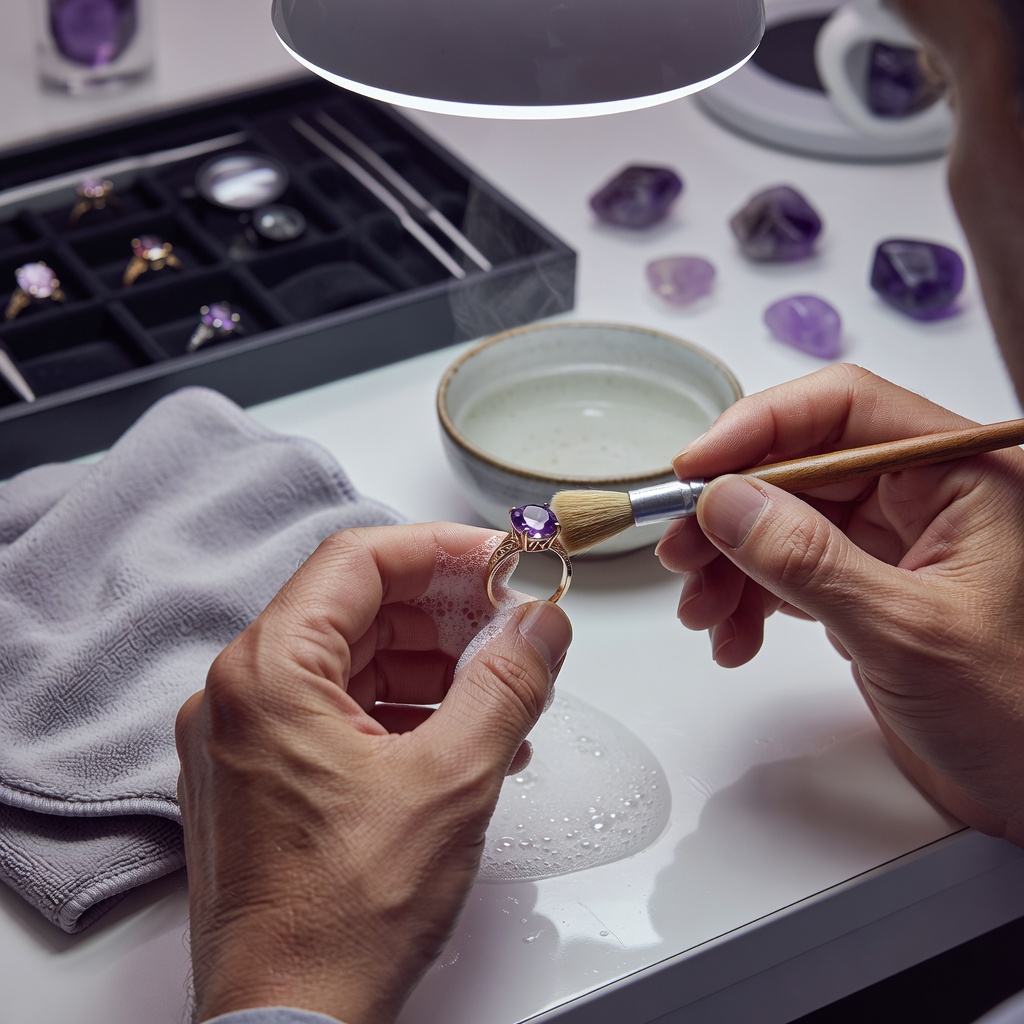
For most people, the best amethyst cleaning methods are also the simplest. Warm (not hot) soapy water with a mild dish soap is widely considered the safest routine approach for Amethyst Care and Cleaning. Place the jewelry in the water for a short soak, then use a soft brush (like a baby toothbrush) to gently clean behind the stone, around prongs, and under gallery areas where oils and dust collect.
Rinsing and drying are just as important as washing. Rinse thoroughly with clean water to remove soap film, which can leave a dull residue if it dries on the surface. Then dry with a lint-free cloth and allow the piece to air-dry fully before storing, which helps prevent water spots and reduces moisture trapped in crevices.
Ultrasonic and steam cleaners are a special case. They can sometimes be safe cleaning for amethyst if the stone is untreated, free of fractures, and securely set, but they can also trigger damage in stones with internal inclusions or weaken older settings. A practical rule: if it’s a vintage ring, a piece with thin prongs, or a stone you suspect might have fractures, skip machines and stick to gentle hand-cleaning—or ask a jeweler before using ultrasonic cleaning.
Example Routine: A Five-Minute Safe Clean
Mix a small bowl of warm water with a few drops of mild dish soap, then soak the jewelry for 5–10 minutes. Gently brush around the underside of the stone and the setting details, focusing on areas where grime hides. Rinse under a gentle stream of water (use a strainer or plug the sink), pat dry with a lint-free cloth, and let it finish drying for 10–15 minutes before putting it away.
Cleaning Solutions To Avoid
Knowing what not to use is a major part of how to clean amethyst safely. Avoid bleach, ammonia, acidic cleaners (including many bathroom and lime-scale products), and harsh polishing dips, as these can damage both the gemstone and the metal mounting. Even if the amethyst survives, these chemicals can discolor or weaken prongs, which increases the risk of losing the stone.
Prolonged soaking in strong detergents or alcohol is also risky. While a quick wipe with a slightly damp cloth is usually fine, extended exposure to solvents can degrade finishes, loosen adhesives used in some jewelry, and contribute to dullness in the setting. As a practical example, dropping jewelry into a “miracle cleaner” jar overnight is a common mistake that may lead to cloudy stones, discolored metal, or loosened components.
Heat-based cleaning is another major “avoid damaging amethyst” rule. Boiling water, very hot tap water, or placing jewelry near heaters and sunny windows can stress the stone and accelerate fading. If you want the color to stay vivid, treat heat and intense sunlight as enemies of long-term brilliance.
Storing And Protecting Amethyst Jewelry
Storing amethyst jewelry correctly prevents scratches and reduces how often you’ll need deeper cleaning. Store each piece separately in a soft pouch or a fabric-lined box so the stone doesn’t rub against harder gemstones or metal edges. This is especially important if you keep multiple rings together, since constant contact can create small abrasions that gradually reduce shine.
Because prolonged sunlight can fade amethyst, choose storage away from windowsills and bright display areas. A closed jewelry box in a cool, stable environment is ideal, and it also protects against temperature extremes that may stress gemstones and settings. If you display jewelry, rotate pieces and keep amethyst out of direct sun to preserve its purple saturation.
Humidity control is a practical but often overlooked part of amethyst maintenance. Toss a small silica packet into your jewelry box (especially in humid climates) to reduce moisture that can tarnish metal settings. Make it a habit to do periodic inspections—once a month, check for bent prongs, thinning claws, or grime around bezels, and clean before buildup becomes stubborn.
When To Seek Professional Cleaning Or Repair
Some situations call for a jeweler rather than DIY cleaning amethyst jewelry at home. If the stone is loose, chipped, or shows internal cracks, professional help is the safest choice because cleaning pressure or vibration can make damage worse. A jeweler can tighten prongs, evaluate the integrity of the setting, and advise whether a repair is needed before cleaning.
Professional amethyst cleaning is also smart for heavily soiled jewelry or pieces with intricate settings. Filigree, pavé accents, and enclosed backs can trap dirt in places a brush can’t fully reach, which means you’ll spend more time scrubbing and risk bending delicate details. Jewelers can use controlled tools and techniques to remove buildup safely without stressing the stone.
If you’re considering ultrasonic or steam cleaning, ask a pro first for your specific piece. A jeweler can assess whether your amethyst is likely untreated, whether the setting is stable enough, and whether there are any fracture lines that make machine cleaning risky. This quick assessment can prevent irreversible damage and is often inexpensive compared to repair costs.
DIY Restoration Tips For Minor Issues
If your jewelry looks dull but the stone and setting are otherwise in good condition, small restoration steps can make a noticeable difference. Start by restoring shine to the metal rather than aggressively scrubbing the gemstone. Use a jewelry polishing cloth designed for your metal type (silver, gold, or platinum) and polish gently while avoiding direct pressure on the amethyst.
For trapped dirt around prongs and bezels, a soft-bristle brush and warm soapy water usually do the job without scratching. Brush in light strokes, changing angles to reach under the stone and into corners where oils collect. A practical tip is to use a cotton swab for tight spaces, but keep it gentle so you don’t snag fibers on prongs or create tension against the setting.
When in doubt, stop rather than “pushing through” with stronger chemicals or harder tools. If you notice a snagging prong, a shifting stone, or a suspicious line that could be a crack, pause and get a professional assessment. This is one of the best “avoid damaging amethyst” habits, because many DIY mistakes become expensive only after the damage spreads.
A Simple Maintenance Schedule
A consistent care schedule makes Amethyst Care and Cleaning easy and prevents grime from turning into stubborn buildup. Weekly, wipe frequently worn pieces with a soft, dry cloth to remove oils and residue before they harden into a cloudy film. This simple step is especially helpful for rings, which collect soap residue and skin oils quickly.
Monthly, do a gentle wash using warm soapy water and a soft brush, then rinse and dry thoroughly. Pair this with a quick setting inspection: look for bent prongs, worn edges, or any sign the stone has shifted. As a practical example, many people schedule this cleaning on the first weekend of the month so it becomes automatic and you’re less likely to forget.
Annually, take prized pieces to a jeweler for a professional check and cleaning. They can confirm the stone is secure, identify early wear in prongs or channels, and recommend the safest cleaning approach based on your jewelry’s construction. This annual habit is one of the most effective amethyst maintenance steps for preventing loss and extending the life of both gemstone and metal.
Frequently Asked Questions
Can I Clean Amethyst With Toothpaste?
No. Toothpaste is abrasive and can scratch amethyst. Use warm soapy water and a soft brush instead.
Is It Safe To Put Amethyst In An Ultrasonic Cleaner?
Ultrasonic cleaners can be safe for untreated, securely set amethyst, but avoid them for stones with fractures, treatments, or unstable settings. Ask a jeweler if unsure.
How Often Should I Clean My Amethyst Jewelry?
Light cleaning (wiping) after each wear and a gentle wash monthly is a good routine; have valuable pieces professionally inspected yearly.
Will Sunlight Fade My Amethyst?
Prolonged exposure to strong sunlight or heat can fade amethyst over time. Store pieces away from direct sun to preserve color.
What Household Cleaners Should I Avoid For Amethyst?
Avoid bleach, ammonia, acids, and strong detergents. These chemicals can damage both the stone and metal settings.
Can Amethyst Be Repaired If Chipped Or Cracked?
Minor chips may be smoothed or recut by a professional lapidary; deeper cracks may require replacement. Have a jeweler assess damage.
Are There Special Considerations For Amethyst Rings Vs. Pendants?
Rings are more exposed to knocks and daily grime, so clean and inspect them more often; pendants may need less frequent checks but still benefit from proper storage.