Amazonite Price Guide: Understanding Market Values and Investment Opportunities
Navigating the diverse pricing landscape of amazonite requires understanding both geological characteristics and market dynamics that influence value. Whether you are a collector seeking museum-quality specimens, a jewelry designer sourcing materials, or an investor exploring alternative gemstone markets, comprehending the factors that drive amazonite pricing ensures informed purchasing decisions. This comprehensive Amazonite Price Guide examines everything from raw mineral valuations to finished jewelry markups, providing actionable insights for buyers at every level of the market.
Understanding Amazonite: What Drives the Market Value
Amazonite, a captivating variety of microcline feldspar distinguished by its distinctive turquoise-green coloration, occupies a unique position in the gemstone marketplace. This potassium aluminum silicate mineral derives its enchanting hue from trace amounts of lead and water within its crystal structure, creating the semitransparent to opaque appearance that collectors and jewelry enthusiasts covet. Unlike many gemstones that achieve color through heat treatment or irradiation, natural amazonite presents an organic beauty that has captivated civilizations from ancient Egypt to contemporary crystal healing practitioners.
Current market demand reflects a fascinating intersection between metaphysical communities and high-end jewelry designers, creating robust price support across multiple consumer segments. The crystal healing market has driven significant demand for palm stones, spheres, and raw specimens, while luxury jewelry houses increasingly feature amazonite in bohemian-chic collections, positioning it as an accessible alternative to expensive emeralds. This dual-market dynamic ensures liquidity for sellers while providing diverse entry points for buyers with varying budget constraints.
When comparing amazonite value per carat against other green gemstones, the mineral offers exceptional value propositions. While fine emeralds command $1,000 to $10,000 per carat and high-grade jadeite reaches $5,000 to $50,000 per carat, premium amazonite rarely exceeds $200 per carat even for exceptional specimens. This price positioning makes amazonite an attractive option for statement jewelry pieces where size matters more than absolute rarity. Historical price trends demonstrate steady appreciation of 8-12% annually over the past decade for fine material, with Russian specimens showing particularly strong performance due to supply constraints.
Key Factors That Determine Amazonite Prices
The valuation of amazonite involves a complex matrix of qualitative assessments that trained gemologists and experienced dealers evaluate before assigning market prices. Understanding these determinants empowers buyers to recognize fair value and identify specimens that offer superior aesthetic appeal alongside investment potential. While seemingly similar stones might appear comparable to untrained eyes, subtle variations in geological formation can create dramatic price differentials ranging from pennies to hundreds of dollars per carat.
Color Intensity and Saturation Standards
Color serves as the primary value determinant in green amazonite pricing, with deep turquoise-green specimens commanding significant premiums over pale or excessively blue material. The most desirable stones exhibit a vivid, saturated teal reminiscent of tropical waters, displaying consistent coloration throughout the crystal structure without zoning or patchy distribution. Stones achieving this optimal color balance typically originate from specific geological environments where lead concentrations and cooling rates created ideal conditions during formation millions of years ago.
Market analysis reveals that specimens with ideal color saturation sell for 300-400% more than pale green or grayish-blue alternatives of identical size and clarity. When evaluating potential purchases, examine the stone under both natural daylight and incandescent lighting, as some specimens shift toward blue under artificial illumination—a characteristic that may reduce value for purists seeking true green amazonite. Premium material should maintain its turquoise character regardless of lighting conditions, indicating stable mineral chemistry rather than surface-dependent coloration.
Clarity and Transparency Considerations
Unlike diamonds or sapphires where absolute transparency defines perfection, amazonite value per carat balances clarity with characteristic mineral inclusions that authenticate natural origin. The presence of white streaks, schiller effects, or subtle matrix patterns actually enhances value in collector specimens, provided these features integrate aesthetically rather than appearing as distracting flaws. However, excessive cloudiness, muddy patches, or dense networks of white feldspar inclusions significantly diminish transparency and reduce both jewelry viability and collector interest.
Fine-grade amazonite should offer translucency when held to strong light, allowing diffused illumination to penetrate several millimeters into the stone while maintaining the characteristic milky depth that distinguishes this feldspar from glass imitations. Cabochon cutters specifically seek material with minimal surface-reaching fractures and consistent internal structure, as these characteristics determine polish quality and durability in finished jewelry. Stones exhibiting "sleeping beauty" qualities—appearing almost jade-like in their smooth, waxy luster—command the highest premiums in both rough and finished markets.
Cut Quality and Polish Standards
The transformation from rough mineral to finished gemstone significantly impacts final valuation, with cutting decisions often doubling or tripling raw material value when executed masterfully. Cabochon cutting remains the dominant style for amazonite jewelry prices, as the domed shape maximizes color display while minimizing the appearance of internal characteristics that might distract from the stone's organic beauty. High-domed cabochons with symmetrical outlines and polished backs typically sell for 40-60% more than flat-backed or irregularly shaped counterparts.
While less common, faceted amazonite presents unique challenges and opportunities in the marketplace. The mineral's perfect cleavage and relatively soft hardness (6-6.5 on the Mohs scale) make faceting technically difficult, increasing labor costs significantly. However, well-executed faceted stones with brilliant cuts that minimize cleavage plane exposure can command 200-300% premiums over cabochons of equivalent weight, particularly in sizes exceeding 10 carats where faceted material becomes genuinely scarce. When evaluating cut quality, inspect the girdle edges for chips or fractures that might indicate improper handling during the cutting process.
Size and Carat Weight Dynamics
Amazonite pricing follows exponential rather than linear progression as carat weight increases, reflecting the geological rarity of large, clean crystals. While small beads or accent stones under 5 carats might retail for $2-5 per carat, specimens exceeding 50 carats with fine color and clarity can achieve $50-200 per carat—a tenfold to fortyfold price multiplication despite only ten times the weight increase. This pricing structure rewards patient collectors who seek substantial specimens, though liquidity decreases significantly above 100 carats due to limited buyer pools for ultra-large stones.
Case studies from recent mineral auctions illustrate this phenomenon clearly: a 25-carat fine-grade cabochon might sell for $400 ($16 per carat), while a matched pair of 5-carat stones of identical quality sells for $150 total ($15 per carat), demonstrating minimal per-carat penalty for smaller sizes but significant premiums for substantial single specimens. When building a collection or inventory, consider purchasing larger rough pieces for custom cutting, as rough material typically trades at 20-30% of finished wholesale prices, offering margin opportunities for those with lapidary connections.
Amazonite Price Per Carat: Complete Breakdown by Grade
Establishing realistic budget expectations requires understanding the tiered pricing structure that governs amazonite wholesale value across different quality grades. The market categorizes material into three primary tiers—commercial, fine, and collector/investment grade—with each segment serving distinct market niches and presenting different risk-reward profiles for buyers. These classifications, while somewhat subjective, provide essential frameworks for comparing offerings across different vendors and geographic markets.
Commercial Grade Specifications and Pricing
Commercial-grade amazonite represents the entry point for most consumers, encompassing material suitable for beaded jewelry, costume accessories, and introductory crystal collections. Priced between $0.50 and $2 per carat at wholesale levels, this grade typically exhibits light to medium green coloration with visible white streaks, cloudiness, or matrix inclusions that preclude high-end jewelry applications. While aesthetically pleasing in aggregate (such as beaded strands where individual stone imperfections become less noticeable), single specimens rarely satisfy discriminating collectors.
This grade dominates mass-market production, supplying the metaphysical shops and tourist markets where price sensitivity outweighs quality demands. When purchasing commercial material, inspect strands or lots for color consistency, as dealers sometimes mix slightly dyed or stabilized stones with natural material to improve visual uniformity. While perfectly acceptable for personal wear or craft projects, commercial-grade amazonite offers minimal investment potential and should be viewed as a consumable rather than an appreciating asset.
Fine Grade Market Valuations
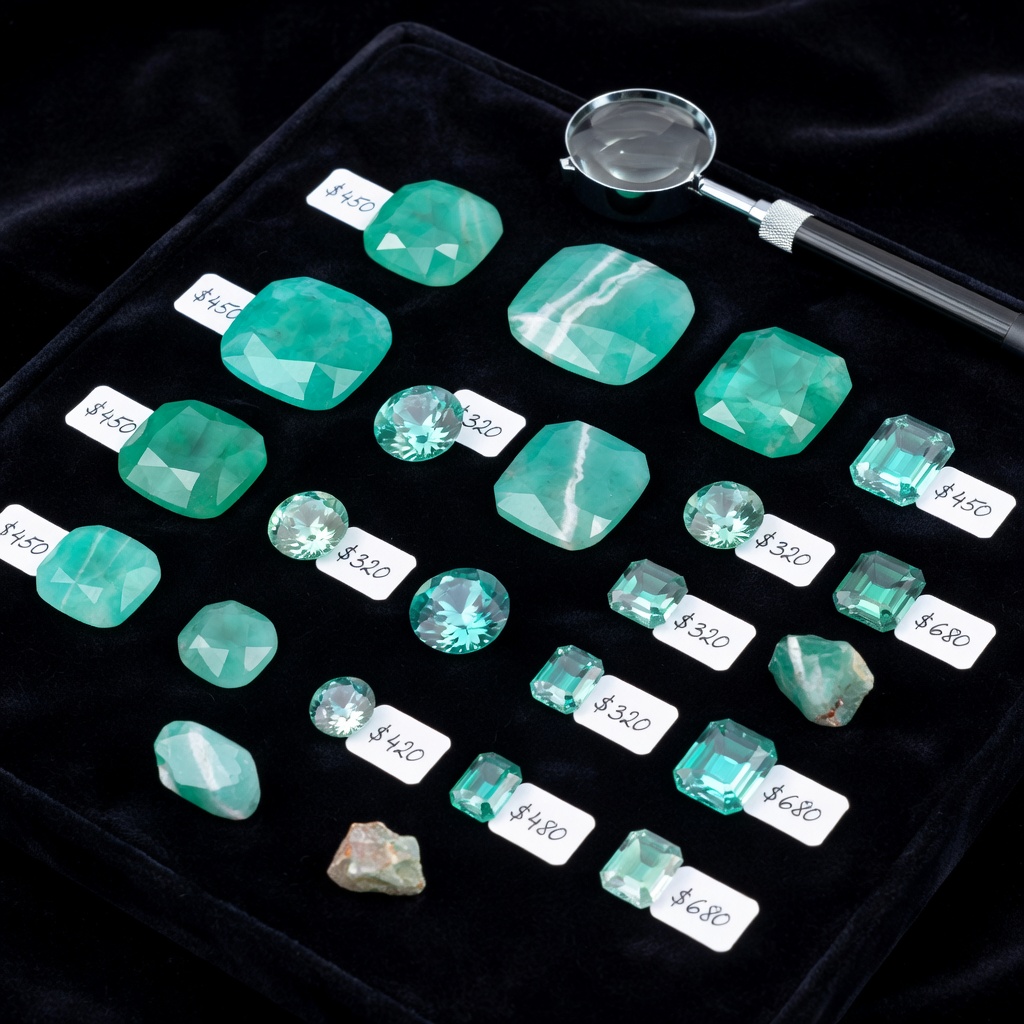
The fine grade bracket, ranging from $5 to $15 per carat, represents the sweet spot for serious jewelry applications and beginning collectors seeking quality without prohibitive expense. Stones in this category display vivid turquoise-green color with minimal white streaking, offering sufficient clarity for transparent-to-translucent cabochons that showcase the mineral's characteristic schiller. This grade supplies the majority of designer silver jewelry and mid-range metaphysical specimens found in reputable gem and mineral shops.
When evaluating fine-grade material, prioritize color consistency over absolute clarity, as slightly included stones with exceptional color often outperform cleaner specimens with washed-out appearance. This grade also includes the bulk of high-quality Peruvian material, which offers brighter teal characteristics than Russian stones but typically lacks the depth that defines collector-grade pieces. For jewelry designers, fine-grade amazonite provides the best balance between material cost and finished piece marketability, allowing healthy retail markups while maintaining accessible price points for consumers.
Collector and Investment Grade Premiums
At the apex of the market, collector and investment-grade specimens command $50 to $200+ per carat, reflecting extreme rarity in size, color, and clarity combinations. These museum-quality pieces typically originate from depleted Russian mines or newly discovered pockets in Colorado that yield exceptional material sporadically. Characteristics defining this tier include deep, saturated teal color approaching 75-80% tonal value, minimal to no visible inclusions under 10x magnification, and sizes exceeding 30 carats for cabochons or 5 carats for faceted stones.
Investment-grade amazonite often features unique characteristics such as asterism (star effects), chatoyancy (cat's eye), or exceptional crystal formations that transcend typical jewelry applications. A recent auction at a prominent mineral show featured a 147-carat Russian cabochon with ideal color and glass-like clarity that achieved $285 per carat, setting a new benchmark for the category. Buyers entering this market segment should insist on provenance documentation and independent laboratory certification, as the high values attract sophisticated treatments and occasional synthetic substitutes.
Treatment Detection and Price Adjustments
The distinction between natural and treated amazonite significantly impacts valuation, with dyed or stabilized material trading at 60-80% discounts compared to untreated natural stones. Common treatments include polymer impregnation to improve durability and dye enhancement to deepen pale material into marketable teal shades. While disclosure requirements vary by jurisdiction, ethical dealers clearly label treated material, which serves legitimate markets for affordable jewelry despite lacking collector value.
Detection requires careful examination: dyed stones often show color concentrations in fractures or surface-reaching inclusions, while natural color maintains consistent distribution throughout the crystal structure. When purchasing material priced above $20 per carat, request documentation from reputable laboratories such as GIA (Gemological Institute of America) or AGL (American Gemological Laboratories) verifying natural, untreated status. The investment in certification typically costs $50-150 but protects against misrepresentation that could result in thousands of dollars in lost value.
Regional Price Variations: Russian vs Peruvian vs Madagascar
Geographic provenance exerts profound influence on Russian amazonite cost and overall market valuations, with specimens from specific localities commanding premiums based on historical significance, color characteristics, and supply scarcity. Understanding these regional distinctions enables buyers to make informed decisions about whether premium pricing for specific origins represents genuine value or merely marketing positioning. The contemporary market primarily recognizes three distinct geographic tiers, each with unique characteristics and price structures.
Russian Amazonite: The Premium Standard
Specimens originating from the Ilmensky Mountains in Russia's Southern Ural region represent the gold standard in amazonite markets, commanding 3-5 times the prices of comparable material from other localities. This premium reflects both geological superiority—Russian amazonite typically exhibits deeper, more saturated teal color with minimal white streaking—and historical significance, as these mines supplied the imperial courts of Europe and the collections of Soviet mineral museums. Contemporary supply remains extremely limited due to mining restrictions and deposit depletion, creating artificial scarcity that drives prices upward.
Authentic Russian material displays a distinctive "sleepy" luster and often occurs in association with smoky quartz and orthoclase feldspar, creating attractive mineral combinations prized by collectors. When evaluating claims of Russian origin, examine associated minerals and matrix material, as Russian specimens frequently display characteristic granite pegmatite hosts unlike the alluvial deposits found in Madagascar. High-grade Russian cabochons routinely achieve $75-150 per carat, with exceptional crystal clusters reaching thousands of dollars for display specimens exceeding 500 grams.
Peruvian Amazonite: Mid-Range Excellence
Peruvian deposits, particularly those near the Pasto Bueno mining district, produce amazonite with distinctive bright, almost neon teal characteristics that appeal to contemporary jewelry designers seeking vivid color statements. While lacking the depth and historical prestige of Russian material, Peruvian amazonite offers excellent value in the $10-30 per carat range for fine specimens, providing 90% of the visual impact at 30% of the cost. The brighter, slightly more blue-green color profile suits modern aesthetic preferences and photographs exceptionally well for online retail.
The Peruvian market has matured significantly over the past decade, with improved mining techniques yielding cleaner rough material suitable for higher-end applications. However, production inconsistencies mean that quality varies dramatically between shipments, creating opportunities for knowledgeable buyers to acquire exceptional lots when miners hit particularly rich pockets. When sourcing Peruvian material, prioritize recent production (post-2018) as earlier mining often produced heavily fractured material requiring stabilization treatments that reduce long-term value.
Madagascar and Colorado: Accessible Alternatives
Madagascar and Colorado deposits supply the bulk of commercial and lower fine-grade material, offering budget-friendly options typically priced between $2-8 per carat for quality suitable for jewelry. Madagascar material tends toward lighter, more aqua-green shades with characteristic white clouding, while Colorado amazonite—particularly from the Pikes Peak region—occasionally yields intense blue-green material rivaling Russian quality at significantly lower prices. These sources provide excellent entry points for new collectors and jewelry makers building inventory without substantial capital investment.
Colorado material deserves special attention due to recent discoveries of high-grade pockets that have temporarily disrupted traditional pricing hierarchies. The "Amazonite Pocket" discovered near Lake George in 2020 produced several hundred kilograms of fine material with color saturation approaching Russian standards, causing temporary price depression in the $15-25 per carat bracket before supply constraints restored typical valuations. When purchasing Colorado specimens, verify collection dates, as material from this specific find commands slight premiums due to documented provenance and superior color stability compared to typical Colorado production.
Provenance Documentation and Resale Value
For investment-grade purchases, documented provenance significantly impacts future resale value and insurance valuations. Specimens accompanied by detailed collection records, mining permits, or historical documentation from famous localities (such as the Colorado-Yule Marble Quarry or Russia's Miass region) achieve 20-40% premiums over undocumented material of identical quality. Serious collectors should request chain-of-custody documentation when acquiring specimens priced above $500, maintaining these records alongside professional appraisals for estate planning and insurance purposes.
Raw Specimens vs Finished Jewelry: Price Comparison
The value chain from rough mineral to finished jewelry involves dramatic price multiplication at each transformation stage, creating distinct investment profiles for raw material collectors versus jewelry consumers. Understanding these markup structures helps buyers determine whether to purchase finished pieces, rough material for custom cutting, or raw specimens for display collections. Each category serves different purposes and offers varying degrees of liquidity and appreciation potential within the broader amazonite jewelry prices ecosystem.
Rough Material and Mineral Specimens
Raw amazonite chunks, geodes, and crystal clusters trade in a specialized market segment distinct from gem material, with prices ranging from $10 for small tumbled pieces to $500 or more for large, aesthetic display specimens featuring matrix associations. The valuation of rough material depends heavily on crystal size, termination quality, color distribution, and associated minerals—factors that differ significantly from the clarity and cut standards applied to jewelry-grade stones. A 500-gram cluster of Russian amazonite crystals on orthoclase matrix might retail for $300-800 despite containing no usable gem material, reflecting collector interest in natural crystal formations.
For lapidary artists and jewelry designers, rough amazonite suitable for cutting typically trades at 15-25% of finished wholesale prices, offering substantial margin opportunities for those with cutting skills. However, purchasing rough requires expertise in evaluating internal characteristics invisible to surface examination, as fractures and inclusions can render expensive rough worthless for jewelry applications. Beginners should start with preformed rough (partially shaped material) to minimize cutting risks while learning to identify suitable rough material.
Beaded Jewelry and Mass-Market Production
Beaded amazonite jewelry—bracelets, necklaces, and malas—represents the volume segment of the retail market, with markup analysis revealing typical retail premiums of 300-800% above wholesale material costs. A strand of 8mm amazonite beads costing $15 wholesale might retail for $60-120 depending on branding, packaging, and sales channel, while designer pieces incorporating sterling silver or gold accents command even higher multiples. These markups reflect labor costs, design intellectual property, marketing expenses, and retail overhead rather than material value alone.
When evaluating beaded jewelry prices, examine stringing quality and bead consistency, as poorly matched color lots or inferior threading materials significantly reduce value despite identical stone quality. High-end beadwork features individually knotted stones (preventing loss if the string breaks) and consistent color grading throughout the strand, justifying premium pricing over loosely strung, mixed-quality alternatives. For personal use, purchasing loose beads and commissioning custom stringing often reduces costs by 50-70% compared to finished retail jewelry.
Designer Settings and Metal Considerations
The choice between silver and gold settings significantly impacts total investment in amazonite jewelry, though the metal choice should complement rather than overshadow the stone's natural beauty. Sterling silver settings dominate the market for amazonite jewelry prices under $500, providing affordable frameworks that highlight the stone's cool green tones. However, the relatively soft nature of amazonite (6-6.5 Mohs) requires protective settings with substantial bezels or prongs, increasing metal weight and fabrication costs compared to harder gemstones like sapphires or diamonds.
Gold settings, whether 14k yellow, white, or rose gold, typically add $200-600 to base material costs depending on design complexity and gold weight. While increasing total investment, gold settings often enhance resale value more than silver alternatives, as precious metal content provides intrinsic value regardless of gemstone trends. When commissioning custom pieces, consider 14k gold for stones exceeding $30 per carat in value, as the setting investment proportionally matches the stone value and provides appropriate protection for the material.
Vintage and Antique Valuation Factors
Antique amazonite jewelry presents unique valuation challenges, as pieces from the Art Deco period through the 1970s bohemian revival often feature authentic, untreated stones of superior quality compared to contemporary mass-market production. However, vintage pieces also carry risks of lead glass filling or undisclosed treatments common in earlier eras before modern disclosure standards. When evaluating antique pieces, examine mountings for wear patterns consistent with claimed periods, and consider professional testing for treatments that might affect value.
Valuation of vintage amazonite requires balancing intrinsic material value against historical and design premiums. A 1920s sterling silver amazonite ring might retail for $150-300 despite containing only $20 worth of rough material, reflecting craftsmanship and historical significance. Conversely, poorly preserved pieces with damaged stones or corroded settings may trade below intrinsic material value, offering opportunities for collectors willing to restore or recut damaged stones. Always verify that vintage pieces haven't been subjected to modern cleaning methods involving ultrasonic or steam cleaning, which can damage untreated amazonite.
Where to Buy: Retail vs Wholesale Pricing Strategies
Strategic sourcing dramatically impacts acquisition costs for amazonite, with price variations of 200-400% common between different distribution channels for identical material. Understanding the wholesale ecosystem, negotiation customs, and verification protocols specific to each venue protects buyers from overpayment while ensuring authentic material acquisition. Whether purchasing single specimens for personal collections or building inventory for resale, channel selection fundamentally determines overall investment efficiency.
Gem Shows and Mineral Expos
Major gem and mineral shows, particularly the Tucson Gem and Mineral Show held annually in February and the Denver Gem and Mineral Showcase in September, offer unparalleled opportunities for acquiring amazonite wholesale value at 40-60% below typical retail pricing. These events aggregate hundreds of dealers from mining regions worldwide, creating competitive environments where cash transactions and volume purchasing unlock significant discounts. However, success requires preparation: bring cash (many dealers offer 5-10% discounts for cash payments), wear comfortable clothing for outdoor venues, and carry a portable UV light and 10x loupe for field testing.
Negotiation tactics at shows differ from retail environments—expect to offer 70-80% of asking prices as opening bids, with final settlements typically occurring at 60-70% of initial quotes for cash purchases. Building relationships with specific dealers over multiple show seasons yields "first look" privileges at new inventory and access to back-room specimens not displayed publicly. For serious collectors, attending the smaller satellite shows surrounding major events often reveals better values than the high-traffic main venues, as smaller dealers offer competitive pricing to offset lower foot traffic.
Online Marketplace Analysis
Digital platforms offer convenience but require heightened vigilance regarding authenticity and value assessment. Etsy and eBay host thousands of amazonite listings ranging from raw specimens to finished jewelry, with price spreads reflecting vastly different quality levels and seller expertise. Specialized gem dealers with dedicated websites typically offer superior material compared to general marketplace vendors, though at 20-30% price premiums that reflect curation and authenticity guarantees.
When purchasing through online marketplaces, prioritize sellers offering detailed photographs under multiple lighting conditions, specific locality information, and reasonable return policies (minimum 14 days). Be particularly wary of listings using terms like "natural style" or "amazonite color," which often indicate dyed substitutes. Cross-reference prices across platforms—if a dealer on Etsy offers Russian amazonite cabochons at $5 per carat while specialized dealers charge $50+, the material likely originates from Madagascar or represents treated stone.
Wholesale Bulk Purchasing Requirements
Accessing true wholesale pricing typically requires trade credentials, minimum purchase quantities, and established business relationships. Wholesale dealers generally require tax identification numbers, business licenses, and minimum orders ranging from $500 to $5,000 depending on the supplier tier. These relationships reward volume buyers with pricing 50-70% below retail, but require inventory management capabilities and capital commitment that casual collectors cannot justify.
For those seeking wholesale advantages without massive inventory investment, consider joining mineral clubs or lapidary societies that organize group purchases. Collective buying pools often meet minimum order requirements while distributing costs among multiple members, achieving wholesale pricing for individual buyers. Additionally, some dealers offer "wholesale to the public" pricing during specific sales events or for payment methods that reduce their processing costs (wire transfers rather than credit cards).
Recognizing Pricing Red Flags
Certain pricing anomalies signal potential fraud, misrepresentation, or undisclosed treatments that should trigger buyer caution. Russian amazonite offered at Peruvian prices (under $10 per carat for fine cabochons), "investment grade" material without certification, or rough specimens exhibiting unnaturally uniform color throughout fractures all suggest potential problems. Similarly, sellers refusing specific locality claims ("from various sources") or offering identical "rare" specimens in unlimited quantities likely deal in treated or synthetic material.
When evaluating deals that appear too good to be true, apply the "replacement cost" test: if you could resell the material immediately at triple the offered price to legitimate dealers, the seller either lacks market knowledge (unlikely for established dealers) or the material differs from the description. Trust pricing that aligns with established market ranges outlined in this Amazonite Price Guide, and view extraordinary discounts with appropriate skepticism requiring enhanced verification.
Identifying Fake Amazonite: Protecting Your Investment
The popularity of amazonite has spawned a substantial market in simulants, treatments, and outright frauds that threaten unwary buyers. Developing authentication skills protects financial investments while ensuring collections maintain integrity and value. From inexpensive dyed substitutes to sophisticated polymer-impregnated natural material, the range of deceptive practices requires systematic evaluation protocols before finalizing purchases, particularly in the authentic amazonite buying guide framework.
Common Substitutes and Simulants
Dyed howlite and magnesite represent the most prevalent amazonite counterfeits, offering convincing visual similarities at fraction of natural material costs. These softer minerals (3-4 Mohs hardness versus amazonite's 6-6.5) accept dye readily, creating superficial color matches that fool casual observers. Howlite typically shows black matrix lines that dyed turquoise or green attempts to mimic amazonite's white streaks, while magnesite exhibits higher porosity that creates a chalky appearance unlike amazonite's waxy luster.
Glass imitations, particularly molded or sintered glass products from certain manufacturing regions, present more sophisticated challenges. These simulants often contain controlled bubbles or swirl patterns meant to simulate natural inclusions, though examination under magnification reveals conchoidal fracture patterns and perfectly round bubbles unlike natural mineral characteristics. Composite materials combining genuine amazonite fragments with resin binding agents also circulate in lower-priced markets, offering genuine material content but lacking the structural integrity and value of solid natural stones.
Physical Testing Methodologies
Basic gemological testing provides definitive identification without requiring expensive laboratory equipment. Hardness testing using a steel knife blade (5.5 Mohs) or quartz crystal (7 Mohs) quickly eliminates softer substitutes—amazonite should resist steel scratching but yield to quartz. Specific gravity testing using heavy liquids or calibrated scales distinguishes amazonite (2.56-2.58 SG) from heavier substitutes like dyed jadeite (3.30 SG) or lighter plastics (1.05-1.40 SG).
Refractive index measurements using a refractometer provide conclusive identification, with amazonite showing RI values of 1.522-1.530. Fluorescence examination under long-wave UV light often reveals dyed material through uneven color distribution or abnormal reactions, as most dyes fluoresce distinctly differently from natural feldspar luminescence. For high-value purchases, advanced testing including infrared spectroscopy or Raman analysis identifies polymer treatments and dye compositions definitively.
Price Discrepancy Analysis
Pricing anomalies often indicate synthetic or treated stones before physical examination confirms suspicions. Natural Russian amazonite cannot legitimately sell for $2 per carat in today's market—such pricing indicates either misrepresented origin or treated material. Similarly, perfectly clear, intensely colored large cabochons (50+ carats) offered at moderate prices likely represent dyed material, as natural amazonite rarely achieves such clarity without significant premiums.
When evaluating green amazonite pricing, compare offerings against established benchmarks from this guide. Material priced 50% below comparable offerings from reputable dealers warrants enhanced scrutiny, though occasional legitimate deals exist when collectors liquidate estates or dealers clear aging inventory. Request written guarantees of natural, untreated status for any purchase exceeding $100, ensuring legal recourse if material proves otherwise.
Certification and Laboratory Verification
For purchases exceeding $500, or when authenticity doubts persist, professional certification from GIA, AGL, or independent gemological laboratories provides essential documentation. These reports verify natural origin, identify treatments, and document geographical source when possible. Certification costs ($50-300 depending on service level) represent insurance against misrepresentation that could cost thousands in diminished value.
When submitting material for testing, request specific treatment screening including dye detection and polymer impregnation analysis rather than standard identification reports. Keep certification documentation with specimens, as future sales require provenance verification to maintain value. For inherited or undocumented pieces, certification establishes baseline value for insurance and estate purposes, particularly important given the increasing prevalence of treated material in vintage collections.
Investment Potential and Future Market Predictions
Beyond aesthetic and metaphysical appeal, amazonite presents legitimate alternative investment opportunities for diversified portfolios, particularly in the high-grade Russian and exceptional Colorado material segments. While lacking the liquidity and historical performance of precious metals or blue-chip gemstones like diamonds, fine amazonite has demonstrated consistent appreciation trajectories that reward patient collectors with geological expertise. Understanding market drivers and risk factors enables informed participation in this specialized asset class.
Appreciation Trends and Performance Metrics
Rare blue-green specimens from depleted Russian mines have demonstrated remarkable 15-20% annual appreciation rates over the past decade, outperforming many traditional investments during the same period. This appreciation stems from genuine supply constraints—Russian mining restrictions have reduced new material availability by approximately 70% since 2010—while demand increases from Asian collectors and luxury jewelry brands seeking distinctive green gemstones. Investment-grade specimens over 50 carats with documented Russian provenance have shown particularly strong performance, with auction records increasing 300% between 2015 and 2023.
However, these returns concentrate in the top 5% of material by quality; commercial-grade amazonite shows minimal appreciation, behaving more like consumable commodities than appreciating assets. Successful investment requires discriminating taste and market knowledge to identify material with genuine scarcity factors rather than generic inventory. Case studies of successful collectors reveal strategies focusing on specific mines known for color stability and historical significance, building focused collections that attract specialist buyers when liquidated.
Mining Restrictions and Supply Dynamics
Environmental regulations and mining policy changes increasingly constrain amazonite supply, particularly from traditional Russian sources where protected status limits new extraction. Similar restrictions affect Peruvian operations, where indigenous land rights and environmental concerns have reduced high-grade material output by 40% over five years. These supply constraints create structural support for prices, though they also increase volatility as market shocks from new discoveries or policy changes cause rapid price adjustments.
Climate change impacts present emerging supply risks, as seasonal mining operations in Colorado and Madagascar face increasingly unpredictable weather patterns affecting extraction schedules. Additionally, rising fuel costs disproportionately affect amazonite mining due to the remote, high-altitude locations of prime deposits, potentially forcing marginal operations to cease production and further restricting supply. Investors should monitor mining news from major producing regions, as supply disruptions often precede rapid price appreciation by 6-12 months.
Collector vs Jewelry Market Stability
Investment strategies should distinguish between collector markets, where value depends on mineralogical significance and aesthetic perfection, and jewelry markets, where fashion trends and wearability determine demand. Collector-grade mineral specimens—large crystals, matrix associations, and unusual formations—demonstrate lower volatility and steadier appreciation than jewelry material, as these pieces appeal to institutional collectors and museums with long-term holding patterns.
Conversely, jewelry-grade amazonite faces fashion cycle risks, where color preferences might shift from teal toward other green gemstones, temporarily depressing prices regardless of material quality. Diversification across both sectors hedges these risks, though serious investors typically weight portfolios 70% toward collector specimens and 30% toward fine jewelry material. The Russian amazonite cost premium in collector markets reflects this stability preference, as these specimens transcend temporary fashion trends.
Insurance and Appraisal Protocols
High-value amazonite collections require specialized insurance coverage beyond standard homeowner policies, which typically limit gemstone coverage to $1,000-2,500 without specific riders. Professional appraisals every 3-5 years establish replacement values for insurance purposes, with costs ranging from $100-500 depending on collection size. Appraisers specializing in mineral specimens rather than jewelry provide more accurate valuations for collector-grade material, as they understand matrix quality, crystal habit, and locality premiums that jewelry appraisers might overlook.
Documentation standards for insurance should include high-resolution photography, detailed locality information, certification reports, and purchase receipts. Store digital copies of these records offsite or in cloud storage to ensure claim viability after theft or natural disasters. For collections exceeding $50,000 in value, consider specialized fine art and collectibles insurance policies that offer agreed-value coverage rather than replacement cost, protecting against market appreciation that standard policies fail to recognize.
Expert Buying Tips for Maximum Value
Mastering the amazonite market requires tactical knowledge beyond basic quality assessment, encompassing timing strategies, relationship building, and preservation techniques that protect investment value. Seasoned collectors employ specific methodologies to acquire superior material at favorable prices while avoiding common pitfalls that diminish collection value over time. These advanced strategies separate sophisticated buyers from casual consumers, enabling the construction of significant collections with optimized capital deployment.
Seasonal Purchasing Optimization
Market timing significantly impacts acquisition costs, with post-Tucson Gem Show periods (March-April) offering particularly favorable pricing as dealers liquidate inventory to cover show expenses and make room for new stock. Similarly, late summer (August-September) precedes the holiday retail season when dealers stock higher-priced inventory, making it an ideal time to purchase collector specimens from aging inventory. Conversely, avoid purchasing in December and January when holiday demand and pre-Tucson speculation drive prices 15-25% higher.
Monitoring wholesale rough markets provides early indicators of finished stone pricing trends. When rough amazonite prices increase at mining sources, expect 6-8 month delays before retail pricing adjusts, creating temporary windows where existing inventory sells below replacement cost. Subscribe to industry publications and dealer newsletters tracking rough market movements, positioning to purchase before inevitable retail price adjustments.
Building Strategic Dealer Relationships
Developing ongoing relationships with established dealers provides preferential access to new acquisitions before public listing, often at "friend of the house" pricing 10-20% below standard retail. These relationships develop through consistent, respectful communication, prompt payment, and fair dealing when selling back to dealers. Reputable dealers remember reliable customers when exceptional pieces arrive, offering first refusal opportunities on material that never reaches public markets.
When cultivating these relationships, demonstrate genuine interest in the material beyond transactional bargaining—ask about mining conditions, new discoveries, and geological characteristics. Dealers appreciate educated buyers who understand the challenges of sourcing quality material, often rewarding this engagement with educational insights and preferential pricing. Attend gallery openings, mineral club meetings, and informal dealer gatherings to build personal connections that transcend pure commercial relationships.
Online Photography Evaluation Techniques
Purchasing amazonite online requires interpreting photographic presentations to assess true color and quality, as digital manipulation and lighting variations frequently misrepresent material. Request photographs against neutral gray backgrounds rather than white (which can overexpose and wash out color) or black (which can deepen apparent saturation unnaturally). Multiple lighting sources—natural daylight, incandescent, and LED—reveal color stability and treatment indicators that single-source photography conceals.
Ask for scale references (coins, rulers) rather than trusting stated dimensions, as camera lenses can distort perceived size. Video presentations showing stones from multiple angles and under different lighting conditions provide superior evaluation opportunities compared to static images. For significant purchases, request "hold" periods allowing independent verification by local gemologists before finalizing transactions, with deposits held in escrow pending approval.
Storage and Long-Term Care
Proper preservation maintains both aesthetic appeal and resale value over decades of ownership. Store amazonite away from direct sunlight, as prolonged UV exposure can fade natural color in some specimens, particularly those from certain Colorado deposits. Maintain stable humidity levels (45-55%) to prevent dehydration cracks in matrix material, using silica gel packets in storage containers for specimens in arid climates. Wrap individual pieces in acid-free tissue paper to prevent scratching, storing separately from harder gemstones that might damage the relatively soft feldspar surface.
Periodic cleaning with mild soap and lukewarm water removes skin oils and environmental contaminants that dull luster over time. Avoid ultrasonic cleaners, steam cleaning, and harsh chemical solvents that can damage untreated stones or remove coatings from treated material. For investment-grade specimens, maintain climate-controlled storage environments similar to fine art preservation standards, ensuring that temperature fluctuations don't stress internal fractures or crystal boundaries.
Frequently Asked Questions About Amazonite Pricing
How much does amazonite cost per carat?
Amazonite typically ranges from $0.50 to $200 per carat depending on quality. Commercial grade with visible inclusions costs $0.50-$2 per carat, fine jewelry-grade ranges $5-$15 per carat, while rare collector specimens with intense color and clarity can command $50-$200+ per carat.
Why is Russian amazonite more expensive than other varieties?
Russian amazonite from the Ilmensky Mountains commands premium prices due to its historically significant deep teal color, superior clarity with minimal white streaks, and limited availability as mining operations have decreased. These specimens often cost 3-5 times more than Peruvian or Madagascar varieties.
How can I tell if amazonite pricing is fair before buying?
Fair amazonite pricing depends on color saturation (vivid turquoise-green commands more), clarity (minimal white streaks), and origin. Compare prices across multiple dealers, request certification for expensive pieces, and verify the stone hasn't been dyed. Be wary of prices significantly below market rates, which often indicate fakes.
Does amazonite color affect the price significantly?
Yes, color dramatically impacts amazonite value. Deep, saturated turquoise-green with minimal white striations commands the highest prices. Pale green or overly blue specimens sell for 50-70% less. The most valuable stones exhibit consistent color throughout without cloudy patches or excessive matrix material.
Is amazonite a good investment compared to other gemstones?
While not as liquid as diamonds or rubies, high-grade Russian amazonite has shown steady 15-20% annual appreciation over the past decade due to mining restrictions. Investment-grade specimens over 50 carats with exceptional color retention perform best, though amazonite should represent only a small portion of a diversified gem portfolio.
Where is the best place to buy amazonite for the best prices?
Wholesale gem shows like Tucson and Denver offer 40-60% savings below retail, though they require trade credentials. Online specialty dealers provide competitive pricing with return policies. Avoid tourist shops and mall jewelers where markups exceed 800%. Always buy from sellers offering authenticity guarantees and fair return windows.
Why are some amazonite stones much cheaper than others?
Price variations stem from quality differences including color intensity, clarity, size, and origin. Cheaper stones often originate from Madagascar or Colorado with lighter colors, contain dye treatments, or are actually dyed howlite. Additionally, small bead-quality stones cost significantly less than large display specimens or fine cabochons.
Can I negotiate amazonite prices with dealers?
Yes, negotiation is standard practice, especially at gem shows, with cash payments, or when purchasing multiple items. Expect 10-30% discounts on individual pieces and up to 50% on bulk purchases. However, investment-grade Russian specimens and rare large cabochons typically have firm pricing due to high demand and limited supply.