Understanding Amazonite's Unique Properties
Before implementing any Amazonite Care and Cleaning routine, understanding the stone's fundamental physical characteristics proves essential for preserving its beauty. Amazonite ranks between 6 and 6.5 on the Mohs hardness scale, positioning it as moderately durable yet significantly softer than gemstones like diamonds or sapphires. This amazonite hardness level means the stone can withstand daily wear but remains vulnerable to scratches from harder materials and rough surfaces. When storing or wearing amazonite jewelry, always consider that everyday items like steel files, quartz countertops, or even sand particles can potentially mar the stone's smooth surface.
The mineral composition of amazonite as microcline feldspar creates specific vulnerabilities that influence amazonite stone maintenance protocols. Feldspar minerals possess perfect cleavage planes, meaning the stone can split along specific directions when struck with sufficient force or pressure. Additionally, natural inclusions and micro-fractures commonly occur within amazonite crystals, creating internal stress points that require gentle handling. For example, a vintage amazonite brooch dropped on a tile floor might develop visible cracks along these cleavage planes, whereas a harder stone like topaz might survive the same impact unscathed.
Chemical sensitivity presents another critical consideration for amazonite preservation. The stone's composition reacts poorly when exposed to acidic substances, harsh cleaning agents, or extreme pH variations. This chemical reactivity means that even brief contact with household cleaners, lemon juice, or vinegar can etch the surface, permanently dulling the stone's characteristic turquoise-green luster. Understanding these properties helps collectors appreciate why gentle, pH-neutral cleaning methods remain non-negotiable for maintaining amazonite's aesthetic appeal and structural integrity over decades of ownership.
Daily Amazonite Care and Cleaning Routine
Establishing consistent daily amazonite maintenance habits prevents the gradual buildup of oils, dirt, and cosmetic residues that diminish the stone's natural brilliance. After each wearing, gently wipe your amazonite jewelry with a soft lint-free microfiber cloth to remove skin oils, dust, and environmental pollutants. This simple thirty-second ritual prevents the accumulation of grime that can eventually work its way into settings and microscopic surface pits. For pieces worn against the skin, such as amazonite pendants or rings, this daily wiping proves particularly crucial because body chemistry varies significantly between individuals, with some people's natural oils proving more corrosive to gemstones than others.
Regular visual inspection forms the backbone of preventive Amazonite jewelry care, potentially saving owners from catastrophic stone loss. Examine prongs, bezels, and clasps weekly using a jeweler's loupe or strong magnifying glass to identify loose stones, bent prongs, or worn settings before failure occurs. Consider the case of a collector who noticed slight movement in her amazonite cocktail ring during a routine inspection; immediate professional tightening prevented the stone from falling out during a subsequent social event. Pay special attention to rings and bracelets, which endure more mechanical stress than earrings or pendants, checking that stones sit securely without wobbling or clicking when gently tapped.
Strategic removal timing protects amazonite from chemical exposure during daily grooming routines. Always remove amazonite jewelry before applying lotions, perfumes, hand sanitizers, hairsprays, or cosmetics, as these products contain alcohol, acids, and oils that can cloud the stone's surface or degrade metal settings. A practical approach involves placing amazonite pieces in a designated dish while completing your morning beauty routine, then putting them on as the final step before leaving home. This practice proves especially important for hand sanitizers, whose high alcohol content can dry out and crack amazonite over time while simultaneously tarnishing silver or gold settings.
Safe Home Cleaning Methods
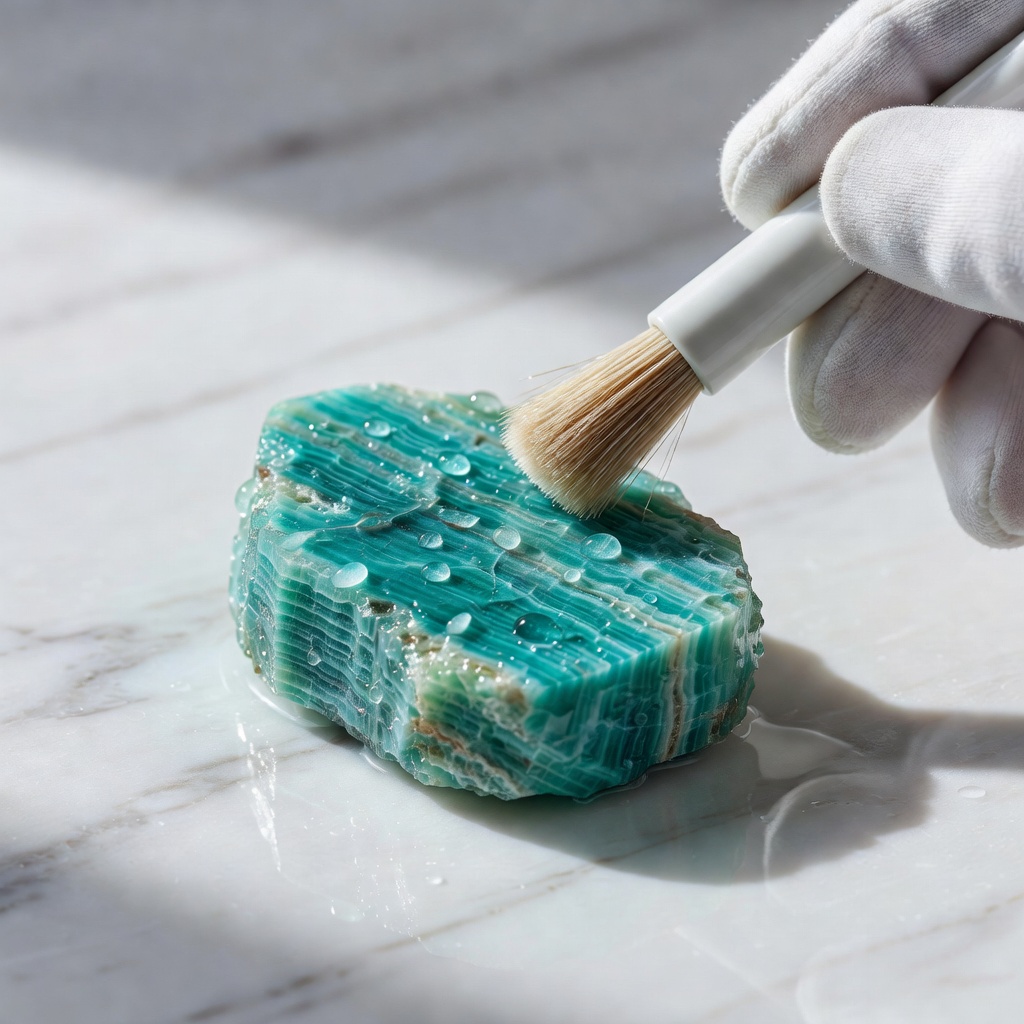
When cleaning amazonite crystal pieces at home, simplicity and gentleness yield the best results while minimizing risk of damage. Begin by preparing a solution of lukewarm water—never hot, as thermal shock can cause fracturing—with a few drops of mild, pH-neutral dish soap. Fill a clean bowl with this solution, ensuring the water temperature feels comfortable to your touch rather than steaming hot. For example, water that feels warm like a comfortable bath (approximately 85-90°F) provides the ideal temperature for dissolving oils without shocking the stone's crystalline structure.
The physical cleaning process requires patience and the right tools to avoid scratching the surface. Submerge your amazonite jewelry briefly, then use an ultra-soft baby toothbrush with fine bristles to gently scrub the stone and settings, applying minimal pressure similar to brushing a delicate silk fabric. Work in small circular motions around the crown and pavilion of the stone, paying special attention to the underside where dirt commonly accumulates in jewelry settings. Avoid vigorous scrubbing or pressing the bristles into the stone, as excessive force can loosen settings or scratch the amazonite's relatively soft surface.
Proper drying techniques prove equally important as the washing process itself when learning how to clean amazonite safely. After rinsing thoroughly under lukewarm running water to remove all soap residue, pat the jewelry completely dry using a clean microfiber cloth or lint-free jewelry polishing cloth. Allow the piece to air dry for a full 24 hours on a soft towel in a dust-free environment before returning it to storage. This extended drying period ensures no moisture remains trapped behind the stone or within settings, where it could cause metal corrosion or mineral deposits that create cloudy films on the amazonite surface.
What to Avoid: Critical Cleaning Mistakes
Understanding amazonite cleaning mistakes helps prevent irreversible damage that professional jewelers cannot always repair. Never subject amazonite to ultrasonic or steam cleaning machines, despite their popularity for other jewelry types. The intense vibrations from ultrasonic cleaners can exploit microscopic inclusions and cleavage planes within the feldspar structure, causing internal fracturing or complete stone breakage. Similarly, steam cleaners expose amazonite to rapid temperature fluctuations and high-pressure moisture that can force water into surface-reaching fractures, potentially causing the stone to crack or cloud from within.
Chemical amazonite damage prevention requires strict avoidance of common household cleaners and jewelry dips. Ammonia, bleach, vinegar, lemon juice, and commercial jewelry cleaning solutions containing harsh solvents can etch the surface of amazonite, permanently removing its polish and creating microscopic pitting. A case study from a gemological laboratory documented an antique amazonite necklace that lost its signature luster after the owner soaked it in a vinegar solution for fifteen minutes; the acid etched the surface so severely that professional repolishing could only partially restore the original appearance. Even brief exposure to chlorine in swimming pools or hot tubs can cause similar etching while simultaneously attacking the metal settings.
Temperature management plays a crucial role in preserving amazonite's structural integrity. Avoid exposing the stone to extreme temperature changes, such as moving from a hot sauna to cold air conditioning or placing hot jewelry near air conditioning vents. Thermal shock causes differential expansion between the stone and its setting or within the crystal structure itself, potentially creating new fractures or expanding existing ones. Additionally, never use hair dryers or heating lamps to speed up drying after cleaning, as concentrated heat can dehydrate the stone and cause surface cracking.
Proper Storage Solutions
Implementing effective Amazonite storage tips begins with understanding how to prevent physical damage and environmental degradation. Always store amazonite pieces separately in individual soft fabric pouches, lined jewelry boxes with dividers, or acid-free tissue paper to prevent scratching from contact with harder gemstones or metal jewelry. A practical example involves organizing a jewelry collection where amazonite rings reside in a dedicated compartment away from diamond studs or metal chains, eliminating the risk of harder materials scratching the feldspar surface during drawer movement or travel.
Light exposure management significantly impacts long-term amazonite preservation and color stability. Prolonged exposure to direct sunlight or intense artificial lighting can cause the stone's distinctive green-blue color to fade over time, particularly in lower-quality specimens with natural color zoning. Store amazonite jewelry in a dark drawer, closed jewelry armoire, or opaque boxes rather than on open display stands near windows. For collectors displaying amazonite crystals or carvings, consider UV-protective glass cases or rotating displayed pieces every few weeks to ensure even light exposure and prevent localized fading.
Humidity control prevents surface dulling and potential chemical reactions that affect both the stone and its settings. Include silica gel packets in your jewelry storage containers to absorb excess moisture, particularly in humid climates or during seasonal changes. Excess humidity can cause surface oxidation on metal settings, which may then transfer tarnish to the amazonite, while also promoting the growth of microscopic molds or mildews that create filmy deposits on the stone. Replace silica packets every six months, or when they indicate saturation through color-changing crystals, ensuring your storage environment maintains optimal dryness for preserving amazonite's natural brilliance.
Spiritual Cleansing vs. Physical Cleaning
Distinguishing between physical dirt removal and energetic cleansing remains essential for practitioners who use amazonite for metaphysical purposes. Physical Amazonite Care and Cleaning removes tangible contaminants like oils, dust, and cosmetic residues that obscure the stone's optical properties, while spiritual amazonite cleansing methods address the crystal's energetic field and vibrational frequency. Many crystal healers believe that amazonite absorbs negative energies from its environment or wearer, necessitating regular energetic clearing to restore its metaphysical properties, though these practices differ significantly from maintenance cleaning.
Safe amazonite crystal cleansing techniques for energy work include moonlight bathing, smudging rituals, and sound therapy that avoid physical damage. Placing amazonite under the light of a full moon overnight allows lunar energy to cleanse the stone without water or salt contact. Alternatively, pass the stone through sage or palo santo smoke three to seven times while setting specific intentions for energetic clearing. Sound cleansing using Tibetan singing bowls, tuning forks, or bells creates vibrational frequencies that practitioners believe reset the crystal's energy field. For example, placing amazonite on a wooden surface near a singing bowl for five minutes during meditation provides gentle energetic cleansing without physical risk.
Avoid traditional crystal cleansing methods that physically endanger amazonite's delicate structure. Never submerge amazonite in salt water or bury it in dry salt, despite salt's popularity for absorbing negative energies in crystal healing practices. Salt crystals can scratch the relatively soft surface of amazonite, while salt water solutions may leave residue in microscopic fractures that cause internal pressure or clouding. Similarly, avoid "sunbathing" cleansing methods that expose amazonite to direct sunlight for extended periods, as the UV radiation and heat can fade the stone's color and potentially cause thermal damage.
Wearing Amazonite: Activity Guidelines
Strategic removal during specific activities forms a critical component of wearing amazonite daily while maintaining its pristine condition. Always remove amazonite jewelry before swimming, showering, or washing dishes to avoid chemical exposure and physical impact. Swimming pools contain chlorine and bromine that etch feldspar surfaces, while ocean salt water leaves abrasive crystals that scratch the stone and potentially enter microscopic fractures. Even showering exposes amazonite to soap scum buildup, shampoo residues, and hot water that can loosen settings over time while depositing filmy layers that dull the stone's luster.
Physical activity requires careful consideration for amazonite protection against impact damage. Remove amazonite rings, bracelets, and pendants before engaging in sports, gardening, weightlifting, or household chores involving tools. The stone's 6-6.5 hardness rating means it cannot withstand impact against hard surfaces like gym equipment, garden rocks, or kitchen countertops without risking chips or cracks. Consider the experience of a yoga instructor who wore her amazonite mala bracelet during inversion poses; the bracelet repeatedly struck the hardwood floor during transitions, eventually causing visible surface scratches that required professional polishing to remedy.
Application timing minimizes unnecessary chemical contact and physical stress. Adopt the "last on, first off" rule when dressing: put amazonite jewelry on after applying makeup, hairspray, and perfume, and remove it immediately upon returning home before changing clothes or beginning evening routines. This practice prevents snagging on clothing fibers that might pull on settings, avoids contact with body products that leave residues, and reduces overall wear time. For office workers, consider removing amazonite rings before typing for extended periods, as repetitive contact with keyboards can cause gradual abrasion to the stone's surface and loosen prong settings over months of daily wear.
Professional Maintenance and Restoration
Annual professional inspections provide essential professional amazonite cleaning and security checks that home maintenance cannot replicate. Schedule yearly appointments with a qualified jeweler who can examine prong security, check for loose stones, and professionally polish both the amazonite and its setting using equipment designed for feldspar minerals. During these inspections, jewelers use magnification to identify developing issues such as hairline fractures, setting wear, or metal fatigue that owners might miss during home inspections. A comprehensive maintenance program might include ultrasonic cleaning of the metal components while hand-cleaning the amazonite separately, ensuring the setting sparkles without risking damage to the stone.
Amazonite restoration through professional repolishing offers solutions for scratched or dulled stones, though owners should understand the trade-offs involved. Skilled lapidaries can remove minor surface scratches and restore the stone's original polish using fine grit abrasives and polishing compounds specific to feldspar minerals. However, each repolishing session removes a microscopic layer of material from the stone's surface, slightly reducing its weight and potentially altering the dimensions of custom-cut gems. For example, a heavily scratched cabochon amazonite might lose 0.1-0.2 carats during professional restoration, a worthwhile trade for restoring beauty but something to consider for investment-grade specimens.
Recognizing when to seek immediate professional help prevents minor issues from becoming catastrophic losses. Contact a jeweler immediately if you notice visible chips, cracks extending across the stone's surface, loose movement within the setting, or bent prongs that no longer securely grip the amazonite. Avoid wearing damaged pieces until repaired, as continued use can cause stones to fall out completely or cracks to expand through the entire crystal. For vintage or heirloom amazonite pieces showing significant wear, consult a gemologist specializing in antique jewelry restoration, as these professionals understand historical setting techniques and can source period-appropriate replacement stones if necessary.
Troubleshooting Common Issues
Addressing amazonite care problems promptly restores the stone's appearance and prevents further deterioration. When confronting cloudy film or dullness, first determine whether the issue stems from soap residue buildup, skin oils, or surface damage. Soak the stone in fresh lukewarm water for ten minutes to dissolve potential soap deposits, then gently scrub with a soft toothbrush. If cloudiness persists after thorough cleaning and drying, the stone may have internal fractures filled with debris or surface etching from chemical exposure, requiring professional assessment to distinguish between cleanable issues and permanent damage.
Color fading in amazonite presents particular challenges for collectors wondering about fixing dull amazonite appearance. If fading results from prolonged sun exposure, the color loss often proves permanent, though professional oiling or waxing treatments might temporarily enhance the stone's appearance by filling surface-reaching fractures that scatter light. However, if dullness stems from accumulated grime or minor surface scratches, home polishing with a jeweler's polishing cloth designed for soft gemstones might restore some luster. For significant color changes, consult a gemologist to determine whether the stone underwent artificial color enhancement treatments that have degraded over time, as some treated amazonite requires specific professional restoration techniques.
Surface scratches require careful evaluation before attempting repairs. Minor hairline scratches that do not catch a fingernail might improve with professional polishing, while deeper scratches penetrating the surface need assessment regarding stone stability. Never attempt to buff out scratches at home using commercial abrasive compounds or nail buffers, as these typically contain materials harder than amazonite that will create additional scratching. Instead, document the damage with photographs and consult a professional lapidary who can evaluate whether repolishing, recutting into a smaller stone, or replacement represents the most cost-effective solution for restoring the piece's beauty and value.
Frequently Asked Questions
Can I wear amazonite in the shower?
No, you should remove amazonite before showering. Soap, shampoo, and hot water can leave residue on the stone's surface and potentially damage its structure over time. Always dry amazonite thoroughly if it accidentally gets wet.
How often should I clean my amazonite jewelry?
Perform light cleaning with a soft cloth after each wear, and deep clean your amazonite jewelry every 2-4 weeks depending on frequency of use. Pieces worn daily against skin need more frequent cleaning than occasional statement pieces.
Can I use vinegar to clean amazonite?
No, never use vinegar or other acids on amazonite. As a feldspar mineral, amazonite reacts poorly to acidic solutions which can etch the surface, dull the polish, and permanently damage the stone's appearance.
Why is my amazonite losing its color?
Color fading usually results from prolonged sun exposure or contact with harsh chemicals. Amazonite's green-blue color can fade when exposed to direct sunlight for extended periods. Store in a dark place and avoid wearing during activities with chemical exposure.
Is it safe to clean amazonite with toothpaste?
No, avoid toothpaste as it contains abrasives that can scratch amazonite's surface. Stick to mild soap, lukewarm water, and a soft brush specifically designed for delicate gemstones.
Can amazonite go in salt water?
Avoid salt water exposure as salt crystals can scratch the surface and get into microscopic fractures. If your amazonite contacts salt water, rinse immediately with fresh water and dry completely to prevent damage.
How do I cleanse amazonite's energy without damaging it?
Use safe methods like placing it under moonlight overnight, smudging with sage or palo santo, or using sound cleansing with singing bowls. Avoid salt water, burying in salt, or direct sunlight for energy cleansing.
Can scratched amazonite be repaired?
Minor surface scratches can often be polished out by a professional jeweler, though this removes a small amount of material. Deep scratches or chips require professional assessment and may need recutting or replacement depending on severity.