Introduction to Agate Care and Cleaning
Agate represents one of the most beloved semi-precious stones in both jewelry collections and mineral displays, requiring thoughtful attention to maintain its distinctive banded patterns and vitreous luster. Establishing proper Agate Care and Cleaning protocols ensures these silica-based gemstones retain their aesthetic appeal and structural integrity across generations. With a Mohs hardness rating between 6.5 and 7, agate possesses reasonable durability, yet remains susceptible to chemical damage, thermal shock, and abrasive wear without consistent maintenance routines. Whether you possess delicate moss agate pendants or substantial banded agate bookends, implementing systematic cleaning schedules prevents the accumulation of skin oils, environmental pollutants, and microscopic debris that gradually dull the stone's natural brilliance.
Understanding Agate Composition and Varieties
Agate belongs to the chalcedony family, characterized by its cryptocrystalline quartz structure comprising interlocking microscopic crystals that create distinctive banding patterns and color variations. This unique agate stone composition means that while agate demonstrates good hardness, its porous nature and potential fracture lines require specific considerations during maintenance procedures. Banded agate displays rhythmic layers of chalcedony that may trap cleaning solutions if submerged improperly, while moss agate contains oxidized manganese or iron inclusions resembling organic vegetation that demand gentler handling than solid varieties. Fire agate exhibits iridescent limonite or goethite layers beneath a chalcedony dome, making it particularly sensitive to harsh scrubbing, whereas dyed agates—common in commercial jewelry—may leach color when exposed to solvents or prolonged moisture, necessitating specialized care approaches distinct from natural specimens.
Daily Handling and Preventive Agate Care
Implementing vigilant daily agate care practices significantly reduces the frequency of intensive cleaning sessions while preserving your specimens' pristine condition. Always wash your hands thoroughly with mild soap before handling raw agate specimens or jewelry pieces to prevent transferring skin oils, lotions, or acidic sweat that gradually etch the stone's surface. When applying cosmetics, hairsprays, or perfumes, complete your grooming routine before donning agate jewelry, as these alcohol-based products and chemical compounds create microscopic films that attract dust and diminish the stone's refractive qualities. During physical activities, remove agate rings, bracelets, or pendants to prevent impact damage against hard surfaces; even routine gym equipment or gardening tools can generate sufficient force to chip vulnerable edges or loosen settings in agate jewelry care scenarios.
Safe At-Home Agate Cleaning Methods
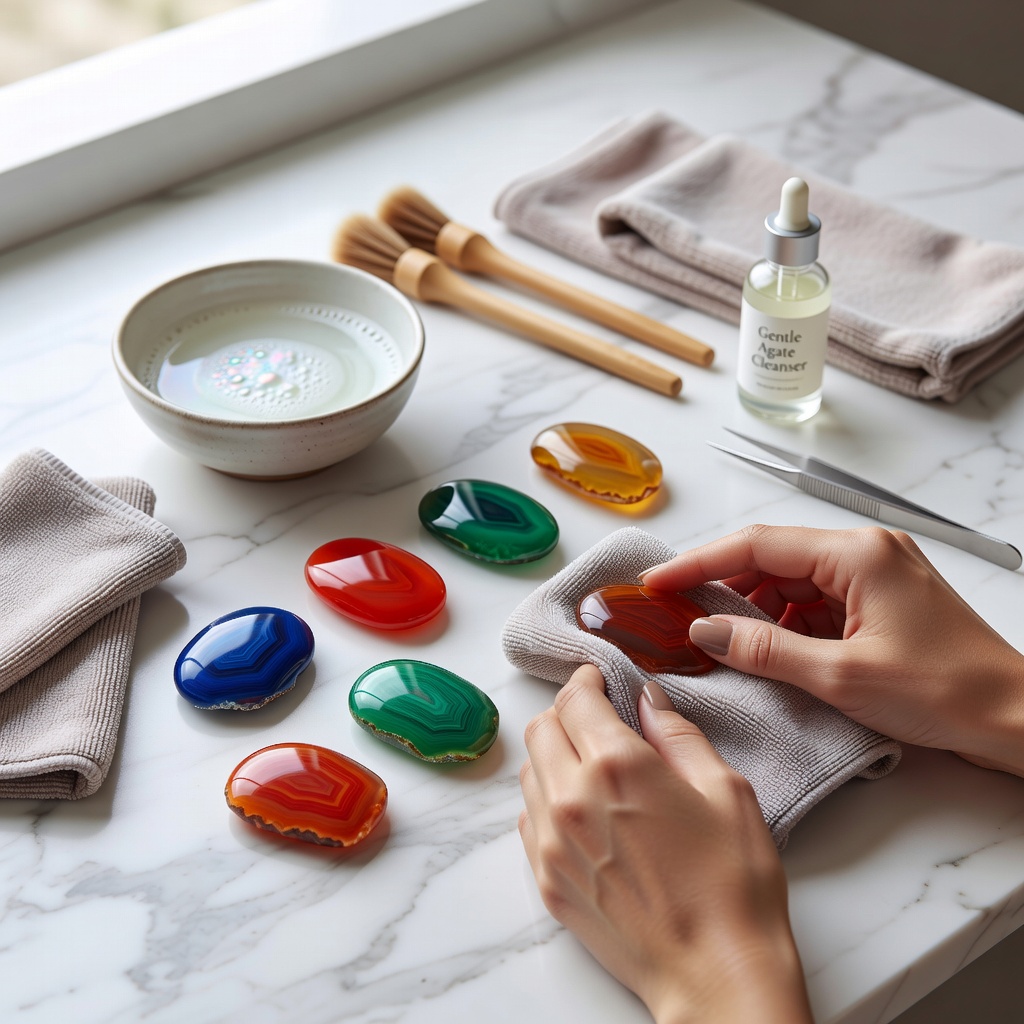
For routine maintenance, safe agate cleaning methods begin with preparing a solution of lukewarm distilled water and mild phosphate-free liquid soap, avoiding detergents containing bleach, ammonia, or abrasive particles. Submerge your agate piece for approximately five to ten minutes to loosen accumulated grime, then employ a soft-bristled baby toothbrush or clean makeup brush to gently dislodge debris from crevices and banding patterns without scratching the surface. Understanding how to clean agate stones properly means rinsing thoroughly under lukewarm running water to eliminate soap residue that attracts future dust accumulation, followed by patting dry with lint-free microfiber cloths rather than abrasive paper towels that might introduce fine scratches. Allow pieces to air dry completely on a soft towel before storage to prevent moisture trapping that could lead to internal staining or setting degradation in jewelry pieces.
Advanced Agate Polishing and Restoration Techniques
When standard cleaning fails to restore desired brilliance, advanced agate polishing tips involve progressive restoration using micromesh sanding pads ranging from 1500 to 12000 grit to carefully remove light surface scratches visible under magnification. For specimens exhibiting dryness or minor crazing, applying minuscule amounts of mineral oil or jojoba oil using a soft cloth can temporarily enhance luster, though this agate restoration technique requires reapplication every few months as the stone naturally absorbs the conditioning agent. Professional collectors often utilize rotary tools with felt buffing wheels charged with tin oxide or cerium oxide polishing compounds for substantial restoration projects, though beginners should practice on inexpensive specimens first, as improper technique can generate excessive heat causing thermal shock or remove excessive material altering the stone's original contours. The Ergnja Collection, a renowned mineral archive, documented remarkable success in revitalizing nineteenth-century agate specimens through careful progressive polishing that respected the original lapidary work while removing century-old oxidation layers.
Proper Storage Solutions for Agate Protection
Proper agate storage strategies prevent physical damage and environmental degradation that compromise long-term specimen integrity. Store individual pieces wrapped in acid-free tissue paper or soft cotton pouches within padded jewelry compartments, ensuring agate stones remain separated from harder gemstones like diamonds (Mohs 10), sapphires (Mohs 9), or even quartz (Mohs 7) that could scratch their surfaces during contact. Maintaining stable environmental conditions proves crucial for agate stone maintenance, particularly keeping relative humidity between 45-55% to prevent the dehydration that causes microscopic cracking in specimens from arid regions, while excessive moisture may promote fungal growth on wooden display bases or encourage oxidation of iron inclusions within certain agate varieties. Display cases featuring adjustable humidity controls or simple silica gel packets monitored regularly provide optimal protection for investment-grade specimens.
Common Agate Care Mistakes to Avoid
Avoiding common agate cleaning mistakes requires understanding that ultrasonic cleaners create dangerous cavitation bubbles that exploit existing fractures, potentially shattering otherwise stable specimens or loosening dyes in treated stones. Similarly, steam cleaning generates rapid temperature fluctuations causing thermal shock that propagates hidden cracks throughout the cryptocrystalline structure, representing a critical agate damage prevention failure. Harsh household chemicals including chlorine bleach, ammonia-based window cleaners, and acidic toilet bowl solutions irreversibly etch agate surfaces, while prolonged exposure to direct sunlight or heat sources like radiator vents causes color fading in dyed specimens and potential dehydration cracks in natural pieces. Even brief contact with nail polish remover or hair dye can permanently stain porous agate varieties, necessitating immediate flushing with water if accidental exposure occurs.
When to Seek Professional Agate Maintenance
Recognizing when professional agate care becomes necessary saves irreplaceable specimens from amateur restoration attempts that compound existing damage. Deep scratches penetrating surface layers, chips affecting structural stability, or loose stones in jewelry settings require expert lapidary services equipped with diamond grinding wheels and polishing compounds unavailable to typical collectors. Professional re-polishing and re-tumbling services utilize industrial vibrating tumblers with silicon carbide grit and ceramic media to restore luster to valuable collector specimens, while certified gemologists can identify whether your agate has undergone dyeing, heat treatment, or polymer impregnation—factors dramatically affecting appropriate agate repair methodologies and long-term care requirements. Museum curators recommend documenting any professional interventions with before-and-after photography to maintain provenance records for valuable specimens.
Seasonal and Long-Term Agate Maintenance Routines
Establishing comprehensive agate maintenance routines accommodates seasonal environmental variations that stress gemstone structures differently throughout the year. During summer months, remove agate jewelry before swimming in chlorinated pools or applying sunscreen, as chemical interactions between UV protectants and chlorine create corrosive compounds that etch stone surfaces, while sweat acidity increases dramatically in heat, requiring immediate post-activity cleaning. Winter precautions include preventing static electricity buildup from wool garments that attract dust to display specimens, and avoiding thermal shock when moving stones between cold exterior environments and overheated interior spaces. Implement quarterly deep cleaning schedules using the methods described above, supplemented by annual professional inspections for high-value pieces to ensure settings remain secure and structural integrity persists through decades of enjoyment.
Frequently Asked Questions About Agate Care and Cleaning
Can I clean agate with vinegar, lemon juice, or other acids?
No, acidic cleaners including vinegar and lemon juice can etch or damage agate's surface over time. Always use pH-neutral mild soap and lukewarm water for safe cleaning.
How often should I clean my agate jewelry and stones?
Clean agate jewelry after each wear if exposed to sweat, cosmetics, or oils. For display specimens or stored pieces, clean monthly or when visible dust accumulates.
Is it safe to soak agate in water overnight?
Brief soaking for 5-10 minutes is safe, but avoid prolonged submersion overnight. Extended soaking may weaken any fillers in fractured stones or affect certain dyes and treatments.
Can I use an ultrasonic cleaner for my agate stones?
Ultrasonic cleaners are generally not recommended for agate. The vibrations can worsen existing fractures, loosen dyes, or damage filled cavities within the stone.
Why has my agate lost its shine and become dull?
Dullness typically results from accumulated skin oils, soap residue, or microscopic surface scratches. Gentle cleaning followed by buffing with a microfiber cloth usually restores the shine.
How do I clean raw or rough agate differently from polished agate?
Rough agate requires extra gentle handling using only running water and fingers or very soft brushes. Avoid scrubbing fragile projections that could break off, and ensure thorough drying to prevent moisture trapping in crevices.
Can I wear agate jewelry in the shower, hot tub, or swimming pool?
Remove agate jewelry before swimming in chlorinated pools, hot tubs, or showering. Chlorine, heat, and sudden temperature changes can damage the stone, degrade any fillings, or cause fading in dyed varieties.
What is the difference between physical cleaning and energetic cleansing of agate crystals?
Physical cleaning removes dirt and oils using soap and water. Energetic cleansing (smudging, moonlight, or selenite charging) is a spiritual practice for resetting energy. Perform physical cleaning first, as dust and oils can interfere with energy work.