The Complete Enstatite Buying Guide for Collectors and Jewelry Enthusiasts
Navigating the world of rare gemstones requires specialized knowledge, particularly when considering orthopyroxene minerals that rarely appear in the commercial jewelry market. This comprehensive Enstatite Buying Guide provides everything you need to know before acquiring this fascinating collector's stone, from quality assessment to proper care techniques. Whether you are a seasoned gemologist seeking to expand your mineral collection or a jewelry designer looking for unique center stones, understanding the nuances of this magnesium silicate gem will help you make informed purchasing decisions and avoid common pitfalls in the specialty gem trade.
Introduction to Enstatite Gemstones
Enstatite represents one of the most intriguing yet underappreciated members of the pyroxene mineral family, specifically classified as an orthopyroxene mineral due to its crystallographic structure. Chemically composed of magnesium silicate (Mg₂Si₂O₆), this gemstone forms in both igneous and metamorphic environments, often occurring alongside other ferromagnesian minerals in peridotite and norite deposits. While mineral collectors have long appreciated enstatite for its interesting crystal habits and geological significance, gem-quality transparent material remains exceptionally scarce in the marketplace, making it a true connoisseur's stone that rarely appears in mainstream jewelry stores.
The rarity of faceted enstatite gemstones stems from the fact that most deposits yield opaque or translucent material suitable only for mineral specimens rather than cutting. When gem-quality crystals do emerge from localities such as Sri Lanka, Myanmar, or East Africa, they typically display remarkable transparency and vitreous luster that distinguishes them from their common massive counterparts. Collector interest has increased significantly over the past decade as awareness spreads about this affordable alternative to more expensive brown gems, though supply remains limited due to the sporadic nature of high-quality discoveries.
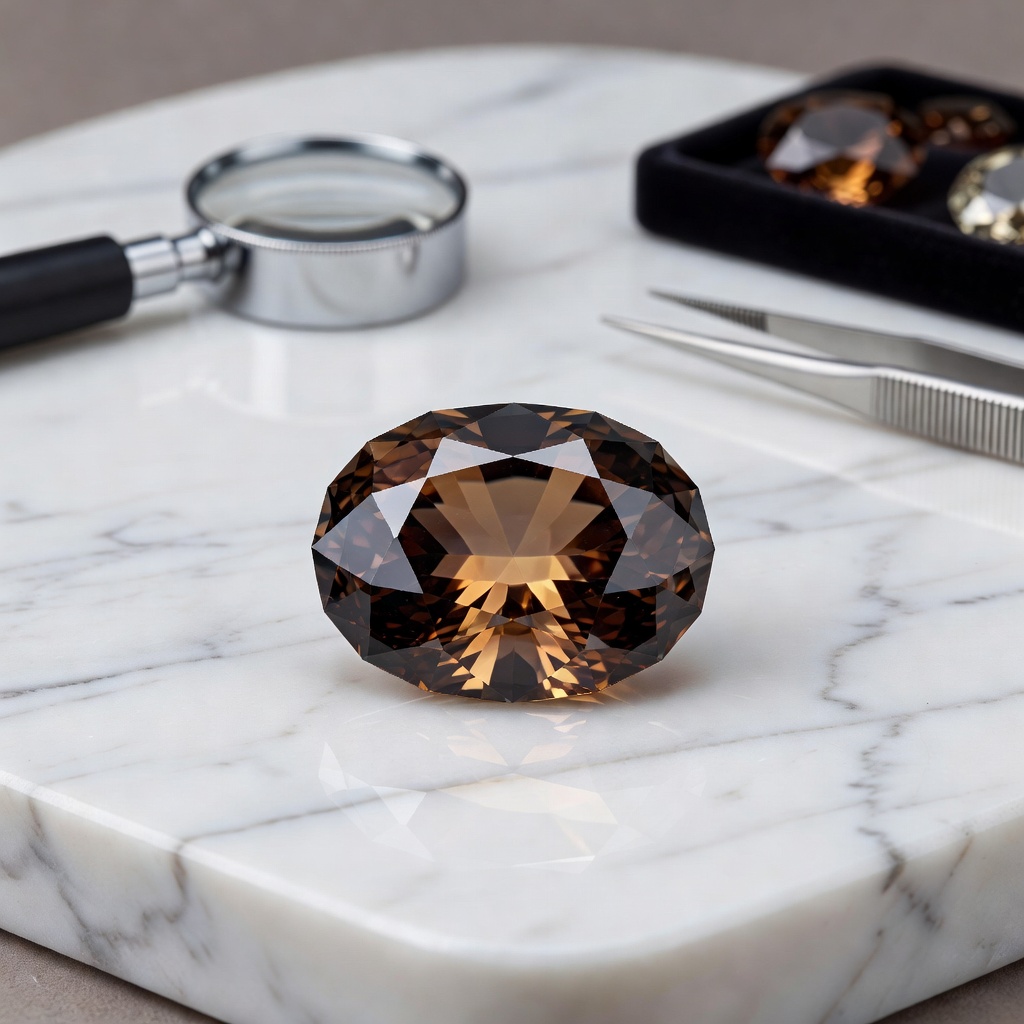
Color variations in enstatite span an attractive spectrum that appeals to enthusiasts of earth-tone gemstones, ranging from rich chocolate browns and golden-yellows to olive greens and nearly colorless varieties. The most desirable specimens exhibit deep brown hues reminiscent of fine cognac or smoky quartz, often with subtle pleochroic effects that display different colors when viewed from various angles. Some rare examples from specific localities may show chatoyancy or asterism when cut en cabochon, adding another dimension to this versatile collector's gem.
Understanding Enstatite Quality Factors
Evaluating enstatite gemstones requires attention to specific quality parameters that differ somewhat from those applied to more common jewelry stones like sapphire or emerald. When assessing color, connoisseurs typically prefer intense brown enstatite specimens with rich saturation and minimal gray or yellow modifying tones, though greenish-brown varieties from certain localities command premium prices among specialists. The most valuable stones display consistent color distribution throughout the crystal without noticeable zoning or windowing, which proves particularly challenging given enstatite's strong pleochroism that can create color variations across different crystal orientations.
Clarity standards for enstatite remain relatively forgiving compared to high-end precious gems, primarily because completely inclusion-free material is extraordinarily rare and prohibitively expensive when available. Buyers should expect to see typical inclusions such as needle-like amphibole crystals, partial healing fractures, or tiny magnetite crystals that reflect the stone's geological formation environment. However, stones with inclusions that significantly impact transparency or create structural weaknesses should be avoided, particularly for jewelry applications where durability concerns already limit suitable setting options.
Cut quality plays a crucial role in maximizing enstatite's optical performance, with skilled lapidaries orienting the rough to emphasize its distinctive pleochroism while maintaining good brilliance. Step cuts and mixed cuts often prove most effective for displaying the stone's color and clarity, though some artisans prefer cabochon cuts for chatoyant material or included specimens where transparency is compromised. When examining potential purchases, look for symmetrical faceting, proper meet points at the girdle, and a polish free of surface pitting or scratches that might indicate cutting difficulties related to enstatite's perfect cleavage in one direction.
Enstatite vs Similar Gemstones
Distinguishing genuine enstatite from visually similar minerals requires careful observation and sometimes advanced testing, particularly when comparing enstatite vs bronzite, which represents an intermediate member of the orthopyroxene series with higher iron content. While both minerals share similar chemical compositions and crystallographic properties, bronzite typically displays a distinctive bronze-like metallic luster and schiller effect caused by exsolved iron oxides, whereas enstatite maintains a more vitreous to pearly luster without metallic reflections. Hypersthene, another close relative with even higher iron content than bronzite, tends toward darker, almost blackish-brown colors with strong pleochroism, making visual separation challenging without specific gravity testing or refractive index measurements.
For practical field identification without laboratory equipment, collectors should examine pleochroic effects carefully, as enstatite typically shows colorless to pale green or brown pleochroism depending on orientation, while bronzite may exhibit more pronounced color shifts. Specific gravity provides a reliable distinguishing factor, with enstatite ranging between 3.20-3.30, bronzite slightly higher at 3.30-3.40, and hypersthene reaching 3.40-3.50 due to increasing iron content. Additionally, enstatite's hardness of 5.5 on the Mohs scale differs slightly from bronzite's 5.5-6 range, though this distinction proves impractical for rough identification without controlled testing.
The marketplace occasionally presents simulants or misidentified stones that require careful scrutiny, including brown tourmaline (dravite), andalusite, or even heat-treated citrine passed off as rare brown enstatite. Synthetic enstatite has been produced for industrial and research purposes but rarely enters the gem market; however, assembled stones or doublets featuring thin enstatite crowns cemented to glass or quartz bases occasionally appear at disreputable venues. Always request refractive index readings when possible, as enstatite's biaxial positive character with readings around 1.658-1.668 provides definitive separation from uniaxial tourmaline or biaxial negative andalusite.
Pricing and Value Assessment
Understanding current enstatite price per carat structures helps buyers establish realistic budgets and recognize genuine bargains versus potentially problematic offerings. Commercial-quality enstatite with moderate inclusions and lighter brown colors typically trades between $50 to $150 per carat, making it accessible to beginning collectors seeking unusual gems without significant investment. Fine quality material exhibiting deep, saturated brown hues with good transparency and minimal visible inclusions commands $200 to $500 per carat, while exceptional specimens exceeding five carats with rare greenish tones or unusual optical phenomena may reach $1,000 per carat or higher in specialized auctions.
Several critical factors influence valuation beyond basic color and clarity, including crystal size, geographic origin, and the presence of untreated status documentation. Larger clean crystals prove exponentially rarer than smaller stones, creating significant price jumps at the three-carat and five-carat thresholds where availability drops sharply. Sri Lankan material historically commands premium prices due to the region's reputation for producing the finest transparent crystals, though recent discoveries in Tanzania and Madagascar have introduced excellent competitive material at somewhat lower price points.
When comparing enstatite to other rare gemstones in similar price brackets, it offers excellent value relative to alexandrite, paraíba tourmaline, or fine spessartine garnet, while providing more distinctive rarity than commercially abundant smoky quartz or citrine. Investment-minded collectors should note that while enstatite lacks the liquidity of diamond or sapphire markets, exceptional specimens have shown steady appreciation of 5-8% annually over the past fifteen years, outpacing inflation while remaining accessible to serious enthusiasts. Unlike treated or enhanced stones that dominate many gem categories, natural untreated enstatite retains value better over time, as treatment disclosure becomes increasingly important to sophisticated buyers.
Certification and Authenticity Verification
Securing independent laboratory verification represents an essential step when acquiring authentic enstatite stones, particularly for significant investments or rare color varieties that command premium prices. Reputable gemological laboratories such as the Gemological Institute of America (GIA), American Gemological Laboratories (AGL), or Gübelin Gem Lab provide comprehensive reports detailing species identification, variety determination, and crucial treatment disclosure. These documents should specifically state "Natural Enstatite" and indicate "No Indications of Heating" or similar language confirming untreated status, as most valuable collector specimens remain unenhanced.
Key documentation elements to verify before finalizing any purchase include precise refractive index measurements (typically 1.658-1.668 for the alpha and gamma rays), specific gravity values, and pleochroism descriptions that match expected enstatite characteristics. The report should note any significant inclusions that might affect durability, particularly cleavage planes or internal fractures that could influence setting decisions or long-term wearability. For specimens claiming rare origins such as historic Sri Lankan mines or specific East African localities, provenance documentation or inclusion photography matching known deposit characteristics adds significant value and authenticity confirmation.
Several red flags should alert buyers to potentially treated or synthetic material, including unusually low prices for supposedly fine quality stones, vendors unable or unwilling to provide laboratory documentation, or descriptions emphasizing "oil treatment" for clarity enhancement. While natural enstatite occasionally receives surface oiling to temporarily mask fractures, this treatment is unstable and requires disclosure; permanent treatments such as heat enhancement or irradiation remain extremely uncommon but should be specifically tested for in laboratory analysis. Be particularly cautious of stones showing unnaturally uniform color saturation without typical inclusions, or those offered with vague "gem reports" from unrecognized laboratories that lack proper accreditation or transparent grading methodologies.
Where to Buy Enstatite Safely
Locating reputable sources to buy enstatite online requires careful vetting of dealers specializing in rare collector gems rather than general jewelry retailers carrying standard commercial inventory. Established online marketplaces such as GemSelect, The Arkenstone, or specialized eBay dealers with extensive positive feedback and return policies offer viable starting points, though buyers should verify that listings include actual photographs rather than stock images and specify treatment status clearly. Look for dealers who provide detailed locality information, carat weights, and dimensional measurements, as transparency regarding these details often indicates professional operation and genuine material.
Physical acquisition opportunities provide advantages for examining pleochroism and luster firsthand, with major gem shows such as the Tucson Gem and Mineral Show, Denver Gem and Mineral Show, or Munich Show hosting specialized dealers in rare orthopyroxene minerals. These venues allow direct comparison of multiple specimens, examination under various lighting conditions, and face-to-face negotiation with sellers who possess deep knowledge of enstatite's specific characteristics. Mineral shops in major metropolitan areas or university towns sometimes stock fine enstatite crystals, though selection remains limited compared to show environments.
For investment-grade specimens or historic pieces with documented provenance, established auction houses including Heritage Auctions, Bonhams, or specialized mineral auction platforms provide access to curated collections vetted by experts. Private collector networks, accessed through gem and mineral societies or exclusive dealer relationships, occasionally offer the finest material never reaching public markets. Regardless of purchasing venue, insist on examination periods or return privileges allowing verification by independent gemologists, and avoid "final sale" transactions for significant investments unless you possess advanced gemological training and portable testing equipment.
Durability and Care Requirements
Understanding enstatite hardness limitations proves essential for maintaining these gemstones in pristine condition throughout years of ownership and potential display. With a rating of 5.5 on the Mohs hardness scale, enstatite falls into the moderately durable category, meaning it resists scratching from materials below this hardness but remains vulnerable to everyday dust (which contains quartz at 7 hardness) and common household items. This moderate hardness, combined with distinct cleavage in the prismatic plane, creates potential vulnerability to chipping or breaking upon sharp impact, necessitating thoughtful handling and protective settings when used in jewelry applications.
Proper cleaning methods prioritize gentle techniques that avoid thermal shock or mechanical stress that could exploit cleavage weaknesses or existing fractures. Prepare a solution of mild dish soap and lukewarm water, using a soft-bristled brush such as a baby toothbrush to gently remove accumulated oils and debris from the surface and behind settings. Avoid ultrasonic cleaners entirely, as the vibrational energy can cause existing inclusions to expand or cleavage planes to separate, and never expose enstatite to harsh chemical solvents, steam cleaning, or sudden temperature changes that might cause thermal shock fractures.
Storage recommendations emphasize isolation from harder gemstones that could scratch enstatite's surface during contact. Store enstatite jewelry in individual soft cloth pouches or lined compartment boxes separate from diamonds, sapphires, rubies, or even quartz pieces that might cause abrasion. When traveling, transport pieces in rigid gem jars or padded containers that prevent movement and impact, and consider removing enstatite rings before activities involving potential impact, such as gardening, sports, or heavy household chores. For collection specimens, stable environmental conditions without extreme humidity fluctuations help preserve any natural surface features or attached matrix material.
Enstatite in Jewelry Settings
Designing rare enstatite jewelry requires creative approaches that accommodate the stone's moderate hardness while showcasing its distinctive color and pleochroic effects. Protective setting styles prove essential for longevity, with bezel settings offering superior protection compared to prong settings by surrounding the girdle with a metal rim that shields edges from impact. Halo designs incorporating smaller hard stones such as diamonds or sapphires around the enstatite center provide additional protection while creating visual contrast that emphasizes the warm brown tones characteristic of fine material.
Metal choices should consider both aesthetic harmony and practical protection, with yellow gold and rose gold complementing the warm brown and golden tones of most enstatite while providing malleable settings that can absorb some impact. Platinum and white gold offer durability but may create stark contrast with brown stones unless specifically designed with vintage or antique styling. For earrings and pendants where impact risk remains minimal, more delicate settings including half-bezels or decorative prongs become viable options, though rings require substantial mounting structures that position the stone slightly above the finger to reduce direct contact surfaces.
Occasion suitability plays a crucial role in enstatite jewelry enjoyment, with pieces best reserved for evening events, special occasions, or professional settings rather than daily wear during manual activities. Pendants and earrings make excellent choices for regular use as they avoid the impact risks associated with hand contact, while rings should be designated as "cocktail rings" or occasional wear pieces rather than engagement or wedding jewelry. When commissioning custom designs, work with jewelers experienced in handling softer gemstones who understand the importance of protecting the girdle and pavilion point from direct exposure to hard surfaces.
Investment and Collection Potential
The enstatite investment value proposition appeals to collectors seeking tangible assets with growth potential outside mainstream precious gem markets. Market trends indicate increasing demand from mineral enthusiasts and alternative jewelry designers seeking distinctive materials, while supply constraints from limited mining operations and sporadic discoveries of facet-grade material create fundamental scarcity. Unlike diamonds or sapphires where laboratory-grown alternatives flood lower market segments, enstatite remains exclusively natural in the gem trade, protecting value retention for collector-grade specimens.
Characteristics defining investment-grade material include exceptional clarity with eye-clean appearance, rich saturated color in the brown to greenish-brown range, and cutting quality that maximizes optical performance without excessive weight loss. Specimens exceeding three carats with documented provenance from classic localities such as Sri Lanka's Ratnapura district or Myanmar's Mogok Stone Tract historically outperform smaller stones or material from newer discoveries in terms of value appreciation. Documentation packages including GIA or AGL reports, high-resolution photography, and historical provenance records significantly enhance resale potential and liquidity when owners decide to divest.
Long-term value retention comparisons favor enstatite over commercially treated or mass-market gemstones, though it lacks the immediate liquidity of diamond or ruby markets. While mainstream gems face price pressure from laboratory synthesis and treatment disclosure controversies, natural enstatite maintains straightforward provenance verification and remains unaffected by synthetic competition. Collectors should view enstatite as a five-to-ten-year holding minimum rather than short-term speculation, with the finest specimens potentially serving as legacy pieces or museum donations that provide tax benefits while preserving geological heritage.
Final Buying Checklist
Completing your Enstatite Buying Guide journey requires systematic verification before finalizing any acquisition, regardless of price point or vendor reputation. Essential questions to ask dealers include specific locality information, treatment status guarantees with return rights if laboratory testing reveals otherwise, and clarification regarding any visible inclusions or cleavage planes that might affect durability. Request detailed photographs under multiple lighting conditions including daylight, incandescent, and LED sources to evaluate color consistency and pleochroic effects, and inquire about the stone's history including previous owners or collection provenance for significant specimens.
Documentation requirements demand at minimum a detailed sales receipt specifying weight, dimensions, color description, and treatment status, though independent laboratory reports remain strongly recommended for purchases exceeding $500 or intended for investment purposes. Verify that return policies allow sufficient time for independent verification by a qualified gemologist unaffiliated with the seller, typically seven to fourteen days for domestic purchases and longer for international transactions. For online purchases, confirm insurance coverage during shipping and require signature confirmation upon delivery to prevent loss or substitution during transit.
Post-purchase considerations include immediate photography for insurance documentation, appraisal by a credentialed gemologist for replacement value determination, and discussion with your insurance agent regarding coverage under existing policies or the need for specific riders for high-value gemstones. Establish a maintenance schedule including gentle cleaning every three months and professional inspection annually if set in jewelry, checking for loose prongs or setting wear that might endanger the stone. By following this comprehensive approach, you secure not just a beautiful gemstone but a properly documented collectible that provides lasting satisfaction and potential appreciation.
Frequently Asked Questions
What is enstatite and why is it considered rare?
Enstatite is a magnesium silicate mineral belonging to the orthopyroxene group. It's considered rare in gem-quality form because most deposits produce opaque material suitable only for mineral collections, while transparent, facetable crystals are exceptionally uncommon and highly prized by collectors.
How much does enstatite cost per carat?
Enstatite typically ranges from $50 to $500 per carat depending on quality, with exceptional specimens reaching higher prices. Brown and greenish varieties with good clarity and size command premium pricing, while smaller or included stones are more affordable for beginner collectors.
Is enstatite durable enough for everyday jewelry?
With a hardness of 5.5 on the Mohs scale, enstatite is moderately durable but requires protective settings for daily wear. It's best suited for pendants, earrings, and occasional wear rings rather than heavy-use jewelry like engagement rings or bracelets that receive frequent impact.
How can I distinguish real enstatite from similar stones?
Authentic enstatite displays distinct pleochroism (showing different colors when viewed from different angles), has a specific gravity of 3.2-3.3, and often shows a characteristic brown to greenish-brown color. Laboratory testing is recommended as it can be confused with bronzite, hypersthene, or even brown tourmaline.
What colors does enstatite come in?
Enstatite most commonly occurs in brown, yellowish-brown, and greenish-brown shades. Rarely, it can be found in colorless, white, or gray varieties. The most valuable specimens typically display rich, intense brown hues with good transparency and minimal inclusions.
Where are the best places to buy enstatite gemstones?
Reputable sources include specialized gem dealers at major shows like Tucson Gem Show, trusted online marketplaces with certification guarantees, established auction houses for high-end specimens, and mineral shops that specialize in rare collector gems. Always verify return policies and certification options before purchasing.
Does enstatite receive any treatments or enhancements?
Natural enstatite is typically untreated, which adds to its value among collectors. However, some lower-quality material may be oiled to improve clarity appearance. Always request a gemological report to confirm natural, untreated status when investing in higher-value specimens.
How should I care for enstatite jewelry?
Clean enstatite using mild soap and warm water with a soft brush, avoiding ultrasonic cleaners and harsh chemicals due to its cleavage planes. Store separately from harder gemstones to prevent scratching, and remove enstatite jewelry before physical activities or exposure to extreme temperature changes.